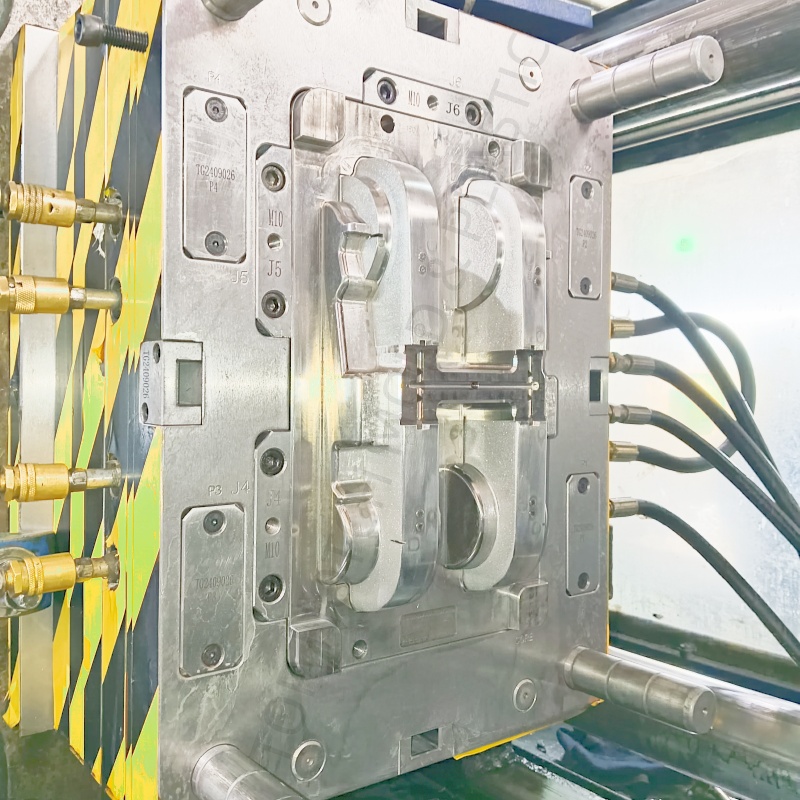
Low Volume Production (LVP) in injection molding refers to manufacturing relatively small quantities of plastic parts, typically ranging from 50 to 5,000 units per production run. This range depends on the complexity of the part, the material used, and the type of mold. LVP occupies the space between prototyping (very small quantities for testing) and high-volume production (mass manufacturing with tens of thousands or millions of parts).
The primary goal of low volume production is to deliver functional, high-quality parts while keeping costs and lead times manageable for small batch requirements. It is commonly used in industries where products are niche, customized, or still in the testing or pre-market stage.
Why Low Volume Production is Needed in Injection Molding
Injection molding is highly efficient for mass production but comes with high upfront costs due to tooling. Steel molds used in high-volume production can cost $10,000 to $100,000 or more, depending on complexity, cavity count, and precision. For small batches, these costs are often unjustifiable. LVP solves this problem by using:
- Alternative molds (soft aluminum molds or prototype molds).
- Additive techniques to create master molds or short-run production molds.
Low volume production is particularly useful for:
- Market testing and pilot production: Companies can launch a small batch to test customer acceptance.
- Customized products: Niche products that only require small quantities per year.
- Product iteration: Modifications can be made easily before committing to mass production tooling.
- Short product lifecycles: Industries like consumer electronics or medical devices often need fast production without large-scale investment.
Methods of Low Volume Production in Injection Molding
Several methods enable low volume injection molding:
1. Aluminum or Soft Metal Molds
- Aluminum molds are much cheaper and faster to manufacture than steel molds.
- They allow hundreds to a few thousand parts to be produced.
- They wear out faster and are less suitable for very high pressures or abrasive plastics.
- These molds are ideal for pilot production or small market testing.
2. Prototype or Rapid Tooling
- Rapid tooling uses CNC-machined or 3D-printed mold inserts in soft metals or hard resins.
- These molds can produce dozens or hundreds of parts with production-quality accuracy.
- Rapid tooling bridges the gap between prototyping and full-scale production.
3. Multi-Cavity vs Single-Cavity Molds
- In low volume production, single-cavity molds are more common to reduce costs.
- Multi-cavity molds can be used if part geometry is simple, but the cost-benefit must be carefully considered.
4. Vacuum Casting and Silicone Molds (Alternative to Injection Molding)
- While not traditional injection molding, vacuum casting can produce small batches of plastic parts using a master part and silicone molds.
- This method produces high-quality, functional parts for small series testing or niche markets.
Materials in Low Volume Injection Molding
LVP supports a wide range of thermoplastics, but material selection depends on the mold type and production method:
- For aluminum molds: ABS, polypropylene (PP), polycarbonate (PC), and other low-to-medium temperature thermoplastics.
- For prototype molds or 3D printed inserts: Lower melting point resins or photopolymers are often used.
- Specialty materials: Can be used, but may require adjustments in mold design and processing parameters.
Advantages of Low Volume Injection Molding
- Reduced upfront tooling cost: Less expensive molds make small batch production feasible.
- Flexibility in design iteration: Design changes can be implemented quickly without heavy financial penalty.
- Faster time-to-market: Quick mold fabrication or alternative methods allow rapid production of test units.
- Lower inventory risk: Only small batches are produced, reducing storage and unsold stock.
- Customization and niche production: Ideal for small orders or personalized products.
Limitations and Challenges
- Higher cost per part: Unit cost is higher because mold cost is distributed over fewer pieces.
- Tool life: Aluminum and soft molds have a limited lifespan, often less than 5,000 shots.
- Material restrictions: High-performance engineering plastics may not be suitable for soft molds.
- Quality consistency: Maintaining uniformity can be challenging with small or soft molds.
- Production speed: LVP is slower compared to high-volume injection molding because each setup is optimized for small runs.
Applications of Low Volume Injection Molding
- Medical devices: Custom or limited-run components like surgical tools, housings, and diagnostic devices.
- Consumer electronics: Small batches of new gadgets, test batches before mass production.
- Automotive industry: Limited-run parts for prototypes, low-production vehicles, or aftermarket components.
- Industrial tools and machinery: Specialized components that are not mass-produced.
- Niche consumer products: Products with limited demand or seasonal items.
Conclusion
Low Volume Production in injection molding is a strategic approach that allows companies to balance cost, quality, and flexibility when producing small quantities of plastic parts. By using soft molds, rapid tooling, or alternative casting methods, manufacturers can produce functional, market-ready components without the high financial risk of full-scale production. LVP enables businesses to iterate quickly, test the market, and serve niche demands, making it an essential step between prototyping and mass production.