
WhatsApp/Wechat:86-138-2878-1334


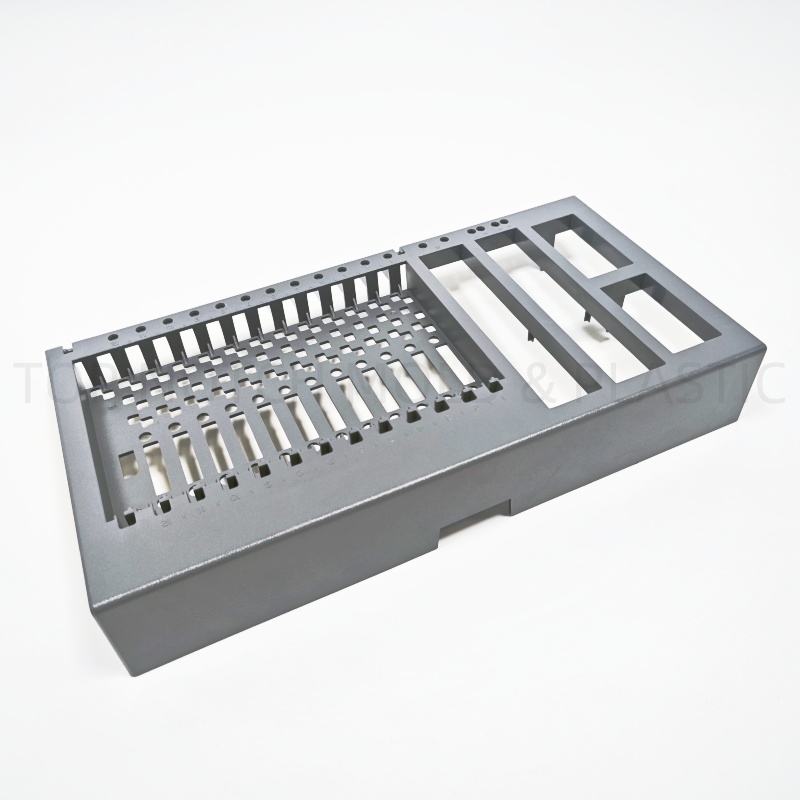
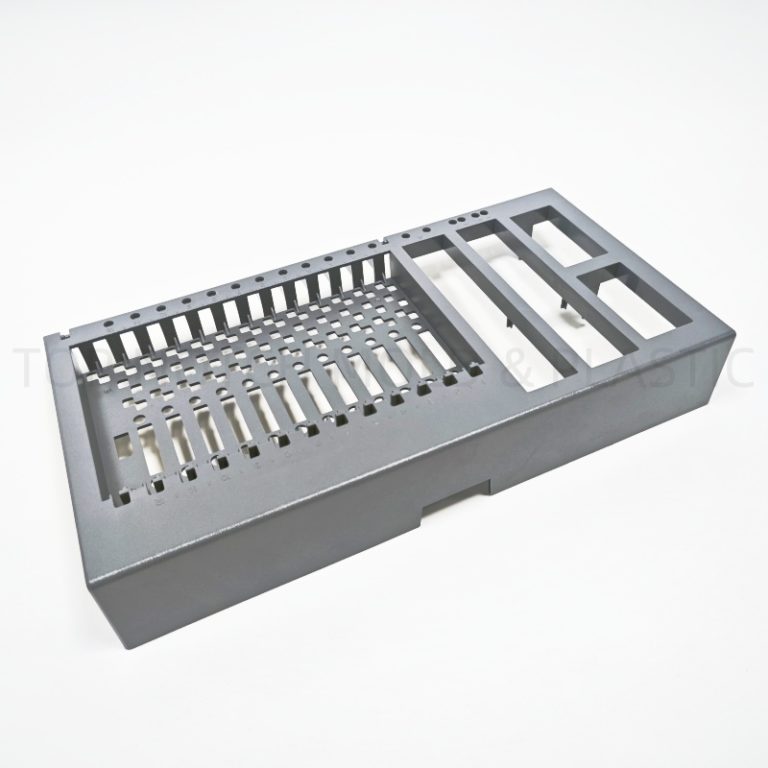
Telecom Products Injection Mold
Mold Description
|
Nombre
|
Plastic Injecition Mold |
| Mould Material | P20,NAK80,SKD11,S316,S50C,S45C,718H,718 ,1.2344, Per customer's requirement |
| Mould base | LKM, HASCO, DME or Per customer's requirement |
| Type of plastic mold | 3-plate mold,2-plate mold |
| Cavity | Single/Multi cavity ,1*1,1+1,1*2,1+1+1,etc |
| Gate Position | Fan gate,Sub gate,Pin Point gate,Hot Runner Valve Gate,Open Nozzel |
| Ejection system | Stripper plate,Lifter,Push Bar,Ejection Pin etc |
| Runner | Hot/cold type |
| Plastic Resin Material | ABS+PC,HDPE, PP, nylon, PEEK, LDPE, ABS, styrene, acrylic, acetal, PE, PTFE, PEI, and PES |
| Mould life | 300,000-500,000-1,000,000 shots |
| Lead time | 25-35 days after deposit received/and mold design is approved by customer |
| Specification | Follow the 3D final drawing |
| Packaging details |
Covering with film for anti rust and packed with wooden Case
|
Parts Production Details
| Product Material | ABS,AS,PP,PPS,PC,PE,POM,PMMA,PS,HDPE,TPE,TPU etc |
| Surface finish | Polishing finish,Texture Finish,Glossy Finish,Pintura,Slik print,Rubber Painting etc |
| MOQ | 500 PCS |
| Packaging details | Carton box or wooden Case upon product weight and customer's requirements. |
| Shipping | By sea ,by train ,or by air as customer requirement |
| Export Country | Janpan,Europe,USA,Mexico,Australia,Middle East,Korea,Asia etc |
| Typical Used For | Housings, containers, caps, fittings,including as below Power-tool housing, Disposable razors, Electrical Switches,Crates/Recycling boxesAutomotive dash boards,Television Cabinets,Drug Inhalation Units,Automotive bumpers,Wheelie bins ,Syringes,Telephone handsets ,Washing-up bowls,DVDs,Bottle Lids/closures,Battery Casings |
| Range of markets | consumer electronics,industrial products, , food processing, aviation, seals/gaskets, lighting, packaging, filter,healthcare, telecommunications, mechanical, water treatment, appliance, recreation,lawn and garden, educational, oil and gas, government, construction,plumbing, surveillance, pumps, marine, motors, gears, RFID tags, electronics,and fasteners. |
- Description
Telecom Products Injection Mold: Design, Materials, and Manufacturing
The telecommunication industry relies heavily on precise, durable, and high-quality plastic components for devices such as routers, switches, antennas, connectors, and network housings. Telecommunication products injection mold technology allows manufacturers to produce complex parts with tight tolerances, high repeatability, and aesthetic finishes, ensuring that telecommunication equipment functions reliably under demanding conditions.
This article introduces telecommunication products injection mold, explaining design principles, material selection, injection molding processes, finishing techniques, assembly, quality assurance, and real-world applications.
1. Introduction to Telecommunication Injection Molding
Plastic injection molding is a primary manufacturing method for producing telecommunication components because it enables high-precision, high-volume production with consistent quality. Components such as router casings, switch enclosures, antenna holders, and connector housings require precise dimensions, impact resistance, and smooth surfaces for both functional and aesthetic purposes.
The main objectives of telecommunication products injection mold include:
- Dimensional accuracy: Ensuring precise fit of internal electronics and connectors.
- Durability: Withstanding vibration, heat, and environmental stress.
- Aesthetic quality: Smooth surfaces, textures, and uniform colors.
- Efficiency: Supporting high-volume production for global telecommunication devices.
Injection molding is ideal for producing parts with complex geometries, integrated features, and consistent quality.
2. Mold Design for Telecommunication Products
The design of molds for telecommunication components is critical to achieving dimensional accuracy, surface quality, and functional performance.
2.1 Core Mold Elements
- Cavities and cores: Machined to produce precise housings, connector shells, and internal support structures.
- Gate and runner systems: Optimized for uniform flow of molten plastic, preventing voids or sink marks.
- Ejection mechanisms: Ejector pins or plates positioned to avoid damaging thin-walled sections or cosmetic surfaces.
- Cooling channels: Ensure uniform cooling to maintain dimensional stability and prevent warping.
2.2 Design Considerations
- Wall thickness: Uniform thickness reduces warping and ensures structural integrity.
- Ribs and bosses: Provide reinforcement without adding excessive weight.
- Draft angles: Facilitate smooth ejection of parts without surface damage.
- Surface textures and finishes: Mold-integrated textures or smooth finishes for functional and aesthetic purposes.
A well-designed mold ensures precise, durable, and visually appealing telecommunication components.
3. Material Selection for Telecommunication Injection Mold Parts
Material choice is critical for telecommunication products injection mold, as components must withstand environmental stress, heat, and electrical requirements.
3.1 Common Materials
- ABS (Acrylonitrile Butadiene Styrene): Strong, impact-resistant, and widely used for enclosures and connectors.
- Polycarbonate (PC): High strength, heat resistance, and transparency for indicator panels or protective housings.
- Polypropylene (PP): Lightweight and chemically resistant for non-critical components.
- Nylon (PA): Durable, wear-resistant, and suitable for connectors or mechanical supports.
3.2 Material Considerations
- UV-stabilized plastics prevent discoloration for outdoor antennas or exposed components.
- Flame-retardant additives meet telecommunication safety standards.
- Electrostatic discharge (ESD) resistant plastics may be required for sensitive electronics.
Proper material selection ensures component reliability, durability, and compliance with industry standards.
4. Injection Molding Process for Telecommunication Components
The injection molding process for telecommunication products follows precise steps to achieve consistent, high-quality parts.
4.1 Plastic Melting and Injection
Plastic pellets are melted and injected under controlled pressure and temperature into mold cavities. Optimized injection parameters ensure complete filling, avoiding voids, warpage, or surface defects.
4.2 Cooling and Solidification
Uniform cooling is essential for dimensional accuracy, particularly for parts with thin walls or long spans. Cooling channels are strategically designed to prevent shrinkage and warping.
4.3 Part Ejection
Once solidified, ejector pins or plates remove the parts from the mold carefully to avoid damage to thin-walled sections or surface finishes.
4.4 Moldes multicavidad
High-volume production often uses multi-cavity molds to produce several identical telecommunication components simultaneously, improving efficiency and reducing per-unit costs.
5. Surface Finishing and Decorative Features
Telecommunication components often require functional or aesthetic surface finishes to enhance usability and branding.
- Texturing: Provides grip for connectors, buttons, or housings.
- Sobremoldeo: Soft-touch surfaces or protective layers for certain functional areas.
- Pad printing or laser marking: Logos, identification numbers, port labels, or alignment indicators.
- Painting or coating: Metallic, glossy, or matte finishes for premium product appearance.
Surface finishing not only improves visual appeal but also enhances usability and ergonomics.
6. Assembly of Injection Molded Telecommunication Parts
Injection-molded parts are assembled with electronic boards, connectors, antennas, and mechanical components.
6.1 Mechanical Assembly
- Snap-fits, screws, or clips integrate enclosures, internal frames, and panels.
- Precision alignment ensures proper connection and fit of electronic modules.
6.2 Electronic Integration
- Molded parts are designed with cavities for PCBs, connectors, or cable routing.
- Protecting sensitive electronics with robust housing ensures durability under vibration and thermal cycles.
6.3 Secondary Finishing
- Adhesive bonding or ultrasonic welding may secure multiple components.
- Decorative overlays, labels, or protective films applied as needed.
7. Quality Assurance in Telecommunication Injection Mold Products
Quality control is crucial, as components must meet functional, aesthetic, and safety requirements.
7.1 Dimensional and Visual Inspection
- Verify housing dimensions and tolerances to ensure proper fit of electronics and connectors.
- Check for surface defects such as warping, flash, sink marks, or color inconsistencies.
7.2 Functional Testing
- Confirm proper alignment of ports, switches, and buttons.
- Test fitment with electronic modules, antennas, and cables.
7.3 Process Monitoring
- Monitor injection temperature, pressure, and cycle time for repeatable quality.
- Statistical process control (SPC) ensures uniformity across high-volume production.
8. Applications of Telecommunication Products Injection Mold
Telecommunication products injection mold technology applies to a wide range of devices:
- Routers and switches: Durable housings and panel components.
- Antennas and connectors: Precision parts for signal integrity.
- Telecommunication enclosures: Protective covers for indoor and outdoor equipment.
- Handheld devices: Casings for mobile communication or networking equipment.
- Industrial networking modules: Multi-material parts with over-molded grips or protective layers.
Injection molding ensures precise, durable, and lightweight components suitable for demanding telecommunication applications.
9. Advantages of Telecommunication Injection Molding
- High precision: Ensures proper fit of internal electronics and mechanical parts.
- High-volume production: Multi-cavity molds reduce production time and cost.
- Material versatility: Supports rigid, flexible, or over-molded plastics.
- Durability: Molded parts withstand vibration, impact, and environmental stress.
- Aesthetic flexibility: Supports various textures, colors, and finishes.
10. Conclusion
Telecommunication products injection mold technology is critical for producing high-quality, durable, and precise components required in modern communication equipment. From mold design and material selection to injection molding, finishing, assembly, and quality assurance, each step ensures components meet functional, aesthetic, and regulatory standards.
Advanced mold design, multi-cavity production, over-molding, and precise process control allow manufacturers to produce housings, connectors, panels, and enclosures that are durable, lightweight, and visually appealing. Telecommunication products injection mold remains a cornerstone of modern telecommunications manufacturing, enabling the production of reliable, high-performance devices for both consumer and industrial applications.
Consumer Electronic, Fotos de piezas de plástico plastic injection molding, neckband headphones injection mold, neckband earphones plastic mold, neckband earbuds, neck bluetooth headset molds, plastic mold, plastic injection mold
SEND INQUIRY
Related Products
© 2025 www.tpi-mould.com. All rights reserved by Top Notch Mold & Tool Co'Ltd
Funciona con Wpboss