WhatsApp/Wechat:86-138-2878-1334


Painting Plastic Parts in Injection Molding
Painting Plastic Parts in Injection Molding: Enhancing Aesthetics, Protection, and Functionality
Plastic injection molding is a cornerstone of modern manufacturing, producing high-precision parts for industries such as automotive, Électronique grand public, medical devices, household appliances, and industrial equipment. While injection molding allows for the creation of complex geometries and durable components, the aesthetic and protective appeal of plastic parts often requires an additional finishing step: painting. Painting not only improves the visual appearance of parts but also enhances their durability, functionality, and market appeal. This article explores the painting manufacturing process for plastic parts in injection molding, including methods, materials, advantages, and applications.
1. Why Paint Plastic Parts?
Painting plastic parts serves several important purposes in the injection molding business:
- Aesthetics: Painting enables a wide range of colors, finishes, textures, and visual effects that cannot be achieved by the raw plastic alone. Consumer-facing products, such as electronics, automotive interior panels, and household appliances, benefit from attractive finishes that enhance brand perception.
- Durability: Special coatings provide resistance to UV exposure, scratches, chemicals, and abrasion. This is especially critical for automotive, industrial, and outdoor products.
- Functionality: Painting can also provide anti-slip surfaces, heat resistance, or protective layers that improve part performance.
- Branding: Painted surfaces can include specific brand colors, logos, or patterns, enhancing product recognition.
- Cost-Effectiveness: Painting allows the use of base plastics that are cost-effective while achieving premium visual finishes, avoiding the need for expensive specialty plastics.
2. Preparation of Plastic Parts for Painting
Before painting, plastic parts require careful preparation to ensure adhesion and quality. The steps typically include:
2.1 Cleaning and Surface Treatment
Injection-molded parts often have residual oils, dust, or mold release agents on their surfaces. Cleaning with solvents or detergents removes these contaminants. Some plastics may also require surface treatments such as flame treatment, corona treatment, or plasma treatment to increase surface energy and improve paint adhesion.
2.2 Sanding or Texturing
Parts may be lightly sanded or treated to create a uniform surface. Texturing can also be applied during molding or after molding to enhance the aesthetic effect of the paint.
2.3 Masking
Areas that should remain unpainted, such as mounting holes, threads, or functional surfaces, are masked with tape, plugs, or specialized masks to protect them during painting.
3. Painting Methods for Plastic Parts
Several painting methods are used in the injection molding industry, depending on part geometry, production volume, and desired finish:
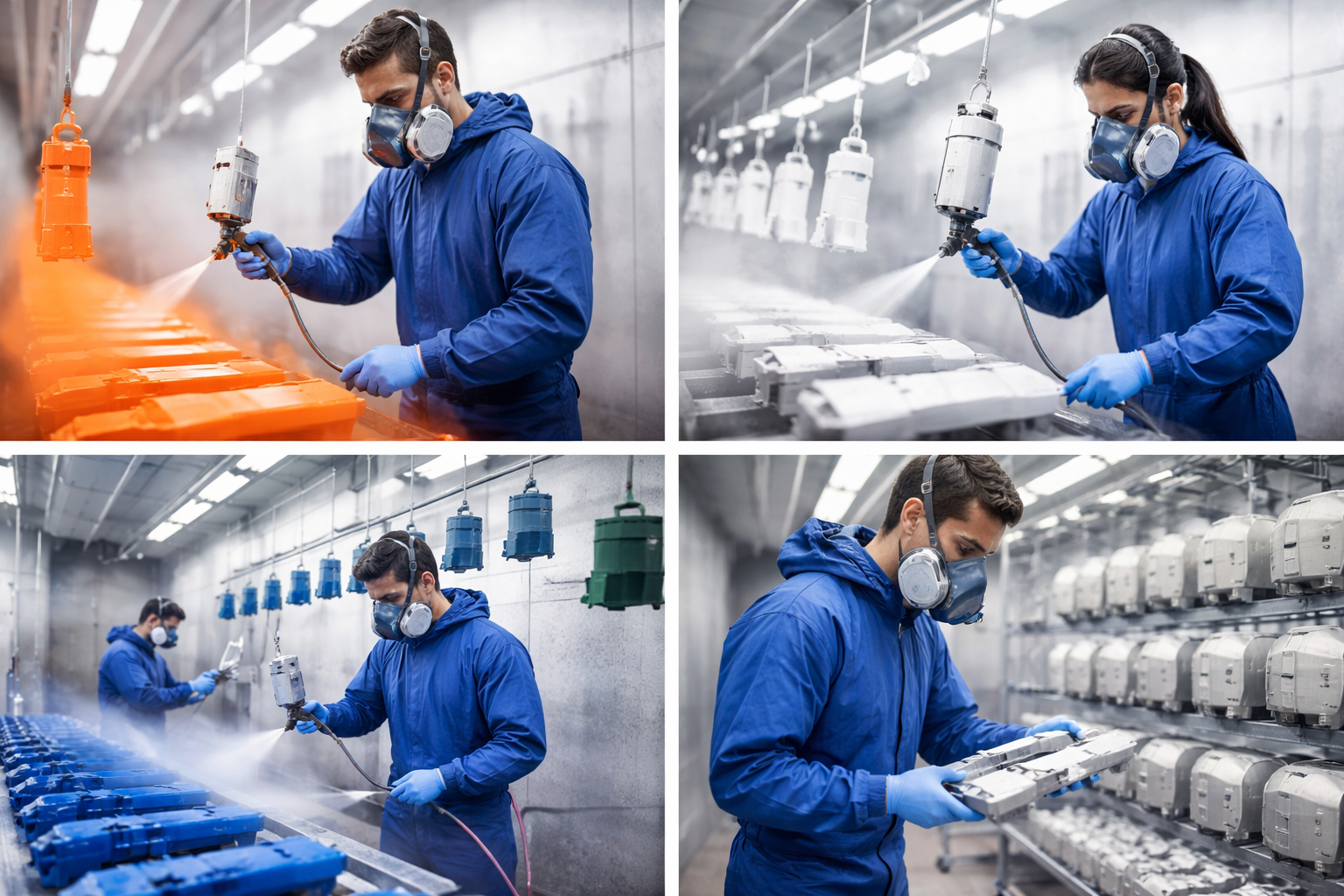
3.1 Spray Painting
Spray painting is one of the most common methods, where paint is atomized and applied uniformly across the part surface. It can be done manually or using automated spray systems for high-volume production. Spray painting is versatile and suitable for various finishes, including matte, gloss, metallic, and pearlescent.
3.2 Electrostatic Painting
Electrostatic painting involves charging the paint particles electrically so that they are attracted to the grounded plastic part. This improves paint transfer efficiency, reduces overspray, and provides uniform coverage, especially on complex geometries.
3.3 Dip Coating
Dip coating is used for parts that require complete coverage or protective layers. The part is submerged into the paint solution and then withdrawn at a controlled rate. Excess paint is drained, and the part is cured.
3.4 Powder Coating
Powder coating involves applying a dry powder to the plastic surface, which is then cured under heat or UV light to form a smooth, durable coating. Powder coating is highly resistant to abrasion and chemicals, making it ideal for industrial or outdoor applications.
3.5 Pad Printing
Pad printing is used to transfer logos, text, or small graphics onto plastic parts. A silicone pad picks up ink from an etched plate and presses it onto the part surface, allowing high-precision printing even on curved or irregular surfaces.
4. Curing and Drying Process
After paint application, the coating must be cured or dried to achieve durability and adhesion. Curing methods depend on the type of paint:
- Air Drying: Some solvent-based paints dry at ambient temperature, though this may be slow for large-scale production.
- Oven Curing: Heat-curable paints are baked at controlled temperatures to harden and adhere to the plastic surface.
- UV Curing: UV-curable paints are hardened using ultraviolet light, offering fast drying and high-quality finishes.
Proper curing ensures the paint is resistant to scratches, chemicals, and environmental factors, maintaining the visual and functional quality of the part.
5. Materials Used in Painting Plastic Parts
The choice of paint depends on the type of plastic, desired finish, and application:
- Acrylic Paints: Popular for consumer products due to their durability, color range, and gloss.
- Polyurethane Paints: Highly resistant to abrasion, chemicals, and weathering, ideal for automotive parts.
- Epoxy-Based Coatings: Provide strong adhesion and chemical resistance for industrial components.
- UV-Curable Inks and Coatings: Used for fast production cycles and intricate details, often combined with logos or graphics.
Each paint type requires compatibility with the substrate plastic (ABS, PC, PP, POM, or others) and may require primers or adhesion promoters.
6. Advantages of Painting in Injection Molding
- Enhanced Appearance: Wide variety of colors, textures, and special effects.
- Improved Durability: Protects against environmental damage, UV, scratches, and chemicals.
- Cost Savings: Allows use of standard plastics while achieving premium finishes.
- Branding Opportunities: Logos, graphics, and custom designs can be incorporated into the painted surface.
- Versatility: Applicable to diverse industries, including automotive, électronique, household, and medical products.
- High Production Efficiency: Automated painting and curing systems allow large-scale, consistent production.
7. Applications in Industry
- Automotive: Painted dashboards, interior panels, trims, and exterior components.
- Électronique grand public: Phone cases, remote controls, and household gadgets.
- Dispositifs médicaux: Colored housings, buttons, and aesthetic covers.
- Household Appliances: Kitchen tools, appliance panels, and plastic housings.
- Industrial Equipment: Protective casings and machine components requiring durability and identification marks.
8. Conclusion
Painting plastic parts is a vital step in the injection molding business, combining aesthetics, protection, and functionality. From spray painting and electrostatic painting to powder coating and pad printing, manufacturers have a variety of methods to achieve durable, precise, and visually appealing finishes. Proper surface preparation, ink selection, and curing processes ensure that painted parts maintain their quality over time.
Incorporating painting into injection-molded plastic parts allows manufacturers to meet consumer expectations, enhance product value, strengthen brand identity, and improve part longevity. Whether for automotive, électronique, medical, or household products, painting remains an essential process in delivering high-quality, market-ready plastic components.
Enquête- Description
Painting Plastic Parts in Injection Molding: Enhancing Aesthetics, Protection, and Functionality
Plastic injection molding is a cornerstone of modern manufacturing, producing high-precision parts for industries such as automotive, Électronique grand public, medical devices, household appliances, and industrial equipment. While injection molding allows for the creation of complex geometries and durable components, the aesthetic and protective appeal of plastic parts often requires an additional finishing step: painting. Painting not only improves the visual appearance of parts but also enhances their durability, functionality, and market appeal. This article explores the painting manufacturing process for plastic parts in injection molding, including methods, materials, advantages, and applications.
1. Why Paint Plastic Parts?
Painting plastic parts serves several important purposes in the injection molding business:
- Aesthetics: Painting enables a wide range of colors, finishes, textures, and visual effects that cannot be achieved by the raw plastic alone. Consumer-facing products, such as electronics, automotive interior panels, and household appliances, benefit from attractive finishes that enhance brand perception.
- Durability: Special coatings provide resistance to UV exposure, scratches, chemicals, and abrasion. This is especially critical for automotive, industrial, and outdoor products.
- Functionality: Painting can also provide anti-slip surfaces, heat resistance, or protective layers that improve part performance.
- Branding: Painted surfaces can include specific brand colors, logos, or patterns, enhancing product recognition.
- Cost-Effectiveness: Painting allows the use of base plastics that are cost-effective while achieving premium visual finishes, avoiding the need for expensive specialty plastics.
2. Preparation of Plastic Parts for Painting
Before painting, plastic parts require careful preparation to ensure adhesion and quality. The steps typically include:
2.1 Cleaning and Surface Treatment
Injection-molded parts often have residual oils, dust, or mold release agents on their surfaces. Cleaning with solvents or detergents removes these contaminants. Some plastics may also require surface treatments such as flame treatment, corona treatment, or plasma treatment to increase surface energy and improve paint adhesion.
2.2 Sanding or Texturing
Parts may be lightly sanded or treated to create a uniform surface. Texturing can also be applied during molding or after molding to enhance the aesthetic effect of the paint.
2.3 Masking
Areas that should remain unpainted, such as mounting holes, threads, or functional surfaces, are masked with tape, plugs, or specialized masks to protect them during painting.
3. Painting Methods for Plastic Parts
Several painting methods are used in the injection molding industry, depending on part geometry, production volume, and desired finish:
3.1 Spray Painting
Spray painting is one of the most common methods, where paint is atomized and applied uniformly across the part surface. It can be done manually or using automated spray systems for high-volume production. Spray painting is versatile and suitable for various finishes, including matte, gloss, metallic, and pearlescent.
3.2 Electrostatic Painting
Electrostatic painting involves charging the paint particles electrically so that they are attracted to the grounded plastic part. This improves paint transfer efficiency, reduces overspray, and provides uniform coverage, especially on complex geometries.
3.3 Dip Coating
Dip coating is used for parts that require complete coverage or protective layers. The part is submerged into the paint solution and then withdrawn at a controlled rate. Excess paint is drained, and the part is cured.
3.4 Powder Coating
Powder coating involves applying a dry powder to the plastic surface, which is then cured under heat or UV light to form a smooth, durable coating. Powder coating is highly resistant to abrasion and chemicals, making it ideal for industrial or outdoor applications.
3.5 Pad Printing
Pad printing is used to transfer logos, text, or small graphics onto plastic parts. A silicone pad picks up ink from an etched plate and presses it onto the part surface, allowing high-precision printing even on curved or irregular surfaces.
4. Curing and Drying Process
After paint application, the coating must be cured or dried to achieve durability and adhesion. Curing methods depend on the type of paint:
- Air Drying: Some solvent-based paints dry at ambient temperature, though this may be slow for large-scale production.
- Oven Curing: Heat-curable paints are baked at controlled temperatures to harden and adhere to the plastic surface.
- UV Curing: UV-curable paints are hardened using ultraviolet light, offering fast drying and high-quality finishes.
Proper curing ensures the paint is resistant to scratches, chemicals, and environmental factors, maintaining the visual and functional quality of the part.
5. Materials Used in Painting Plastic Parts
The choice of paint depends on the type of plastic, desired finish, and application:
- Acrylic Paints: Popular for consumer products due to their durability, color range, and gloss.
- Polyurethane Paints: Highly resistant to abrasion, chemicals, and weathering, ideal for automotive parts.
- Epoxy-Based Coatings: Provide strong adhesion and chemical resistance for industrial components.
- UV-Curable Inks and Coatings: Used for fast production cycles and intricate details, often combined with logos or graphics.
Each paint type requires compatibility with the substrate plastic (ABS, PC, PP, POM, or others) and may require primers or adhesion promoters.
6. Advantages of Painting in Injection Molding
- Enhanced Appearance: Wide variety of colors, textures, and special effects.
- Improved Durability: Protects against environmental damage, UV, scratches, and chemicals.
- Cost Savings: Allows use of standard plastics while achieving premium finishes.
- Branding Opportunities: Logos, graphics, and custom designs can be incorporated into the painted surface.
- Versatility: Applicable to diverse industries, including automotive, électronique, household, and medical products.
- High Production Efficiency: Automated painting and curing systems allow large-scale, consistent production.
7. Applications in Industry
- Automotive: Painted dashboards, interior panels, trims, and exterior components.
- Électronique grand public: Phone cases, remote controls, and household gadgets.
- Dispositifs médicaux: Colored housings, buttons, and aesthetic covers.
- Household Appliances: Kitchen tools, appliance panels, and plastic housings.
- Industrial Equipment: Protective casings and machine components requiring durability and identification marks.
8. Conclusion
Painting plastic parts is a vital step in the injection molding business, combining aesthetics, protection, and functionality. From spray painting and electrostatic painting to powder coating and pad printing, manufacturers have a variety of methods to achieve durable, precise, and visually appealing finishes. Proper surface preparation, ink selection, and curing processes ensure that painted parts maintain their quality over time.
Incorporating painting into injection-molded plastic parts allows manufacturers to meet consumer expectations, enhance product value, strengthen brand identity, and improve part longevity. Whether for automotive, électronique, medical, or household products, painting remains an essential process in delivering high-quality, market-ready plastic components.
Peinture
ENVOYER UNE DEMANDE
Produits connexes
© 2025 www.tpi-mould.com. All rights reserved by Top Notch Mold & Tool Co'Ltd
Alimenté par Wpboss