
WhatsApp/Wechat:86-138-2878-1334


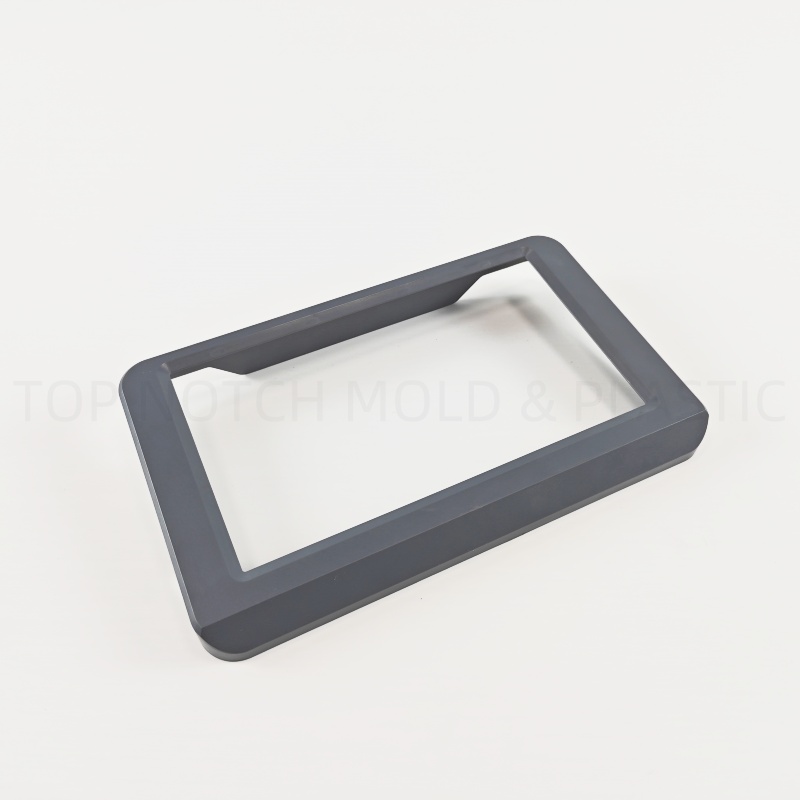
Plastic Camera Frame Products in Injection Mold
Description du moule
|
Nom
|
Moule à induction plastique |
| Matériau du moule | P20, NAK80, SKD11, S316, S50C,S45C,718H,718 ,1.2344, Per customer's requirement |
| Base du moule | LKM, HASCO, DME or Per customer's requirement |
| Type de moule en plastique | 3-moule à plaque,2-moule à plaque |
| Cavité | Simple/Multi cavité ,1*1,1+1,1*2,1+1+1,etc |
| Position de la porte | Porte du ventilateur,Sous-porte,Porte à point d’épingle,Vanne à canal chaud,Ouvrez Nozzel |
| Système d’éjection | Plaque de décapage,Lifter,Barre de poussée,Goupille d’éjection, etc. |
| Coureur | Type chaud/froid |
| Matériau en résine plastique | ABS+PC,PEHD, PP, nylon, REGARDER, PEBD, ABS, styrène, acrylique, acétal, PE, PTFE, PEI, et PES |
| Durée de vie du moule | 300,000-500,000-1,000,000 Coups |
| Delai | 25-35 jours après la réception du dépôt et l’approbation de la conception du moule par le client |
| Spécification | Suivez le dessin final en 3D |
| Détails de l’emballage |
Revêtement avec un film antirouille et emballé avec une caisse en bois
|
Détails de la production des pièces
| Matériau du produit | ABS,COMME,PP,PPS,PC,PE,POM,Le PMMA,PS,PEHD,TPE,TPU, etc. |
| Finition de surface | Finition de polissage,Finition texturée,Finition brillante,Peinture,Imprimé Slik,Peinture en caoutchouc, etc. |
| MOQ | 500 PC |
| Détails de l’emballage | Carton box or wooden Case upon product weight and customer's requirements. |
| Livraison | Par voie maritime ,En train ,ou par voie aérienne selon les besoins du client |
| Pays d’exportation | Janpan,Europe,ÉTATS-UNIS,Mexique,Australie,Moyen-Orient,Corée,l’Asie, etc. |
| Typique utilisé pour | Boîtiers, Conteneurs, Casquettes, raccords,y compris comme ci-dessous Boîtier d’outil électrique, Rasoirs jetables, Interrupteurs électriques,Caisses/Boîtes de recyclageTableaux de bord automobiles,Meubles de télévision,Unités d’inhalation de drogues,Pare-chocs automobiles,Poubelles à roulettes ,Seringues,Combinés téléphoniques ,Bols à vaisselle,Les DVD,Couvercles/fermetures de bouteilles,Boîtiers de batterie |
| Gamme de marchés | Électronique grand public,Produits industriels, , Traitement des aliments, aviation, Joints/joints d’étanchéité, éclairage, emballage, filtre,Santé, télécommunication, mécanique, traitement de l’eau, appareil, récréation,pelouse et jardin, éducatif, Pétrole et gaz, gouvernement, construction,plomberie, surveillance, Pompes, marin, Moteurs, Engrenages, Étiquettes RFID, électronique,et fixations. |
- Description
Plastic Camera Frame Products in Injection Mold: Precision Engineering for Modern Imaging
In the rapidly evolving world of photography and imaging technology, the demand for precision-engineered components has never been higher. Among these critical components, the camera frame plays a fundamental role in maintaining the structural integrity, alignment, and functionality of modern cameras. As cameras become increasingly compact, lightweight, and technologically sophisticated, the manufacturing of camera frames requires techniques that offer precision, consistency, and efficiency. Plastic injection molding has emerged as a preferred method for producing high-quality camera frames that meet the rigorous demands of both professional and consumer imaging devices.
What is Plastic Injection Molding?
Plastic injection molding is a manufacturing process where molten thermoplastic material is injected into a precisely designed mold cavity. The material is then cooled and solidified, taking the exact shape of the mold. This process allows manufacturers to produce highly complex, accurate, and repeatable components with excellent surface finish and structural consistency.
For camera frames, injection molding offers the ability to produce intricate geometries, fine detail, and precise dimensions that are essential for supporting lenses, sensors, électronique, and other critical internal components. Typical materials used in camera frame molding include ABS, polycarbonate (PC), polyamide (PA), and glass-filled nylon, which provide strength, rigidity, and dimensional stability while keeping the product lightweight.
Applications of Plastic Camera Frames
Plastic camera frames are used across a variety of imaging devices. In digital cameras, molded frames provide the structural backbone that supports internal electronics, lens assemblies, and display screens. These frames ensure precise alignment of optical components, which is critical for image clarity and overall performance.
In action cameras and compact devices, plastic frames offer the dual benefits of lightweight design and impact resistance. Unlike metal frames, plastic frames can absorb minor shocks and reduce overall device weight, which is important for portability and ease of use.
Camera frames for drones, smartphones, and security cameras also rely heavily on injection-molded plastics. For drones, the frame must support the camera while withstanding vibrations and aerodynamic stresses. In smartphones, the frame integrates with the device housing, supporting lenses, sensors, and stabilization mechanisms in extremely compact spaces.
Advantages of Injection-Molded Plastic Camera Frames
- Precision and Consistency: Injection molding allows for tight tolerances, ensuring that each frame aligns perfectly with optical components. This precision is crucial to prevent misalignment that could affect image quality or mechanical functionality.
- Complex Design Capabilities: Modern camera frames often require intricate structures, internal supports, and mounting points. Injection molding accommodates these complex designs without the need for extensive post-processing.
- Lightweight and Durable: Plastic materials used in injection molding can be engineered to achieve a balance of light weight and mechanical strength. This is particularly important for portable and handheld devices, where reducing weight improves user comfort and performance.
- High-Volume Production: Once a mold is created, hundreds or thousands of identical frames can be produced efficiently. This scalability makes injection molding cost-effective for mass production while maintaining consistent quality.
- Surface Finishing Options: Injection-molded frames can be produced with a smooth, matte, or textured finish directly from the mold. Additional surface treatments, such as painting, coating, or plating, can further enhance appearance and wear resistance.
Key Considerations in Manufacturing Camera Frames
Producing high-quality camera frames requires careful attention to mold design, material selection, and quality control. Mold design must account for precise dimensions, proper wall thickness, draft angles for easy ejection, and cooling efficiency. Advanced molds often include multi-cavity setups, allowing multiple frames to be produced simultaneously, optimizing production speed and efficiency.
Material selection is equally critical. Plastics such as polycarbonate offer excellent impact resistance, dimensional stability, and optical clarity, while ABS provides good mechanical strength and ease of processing. Glass-filled nylons enhance rigidity, making them suitable for frames that support heavier lens assemblies or require higher structural integrity.
Quality control is essential to ensure that each frame meets strict specifications. Manufacturers employ CMM (Coordinate Measuring Machines), optical inspection, and mechanical testing to verify dimensions, surface quality, and structural performance. This ensures that each frame will reliably support sensitive camera components and maintain performance over time.
Innovations and Trends in Camera Frame Injection Molding
The camera industry is constantly evolving, driving innovations in frame design and manufacturing. Lightweight composite plastics, hybrid molding techniques, and multi-material injection molding are enabling even more compact, robust, and functional frames. These advances allow manufacturers to integrate features such as built-in vibration damping, cable channels, and modular mounting points directly into the frame, reducing assembly complexity and enhancing durability.
Sustainability Considerations
Environmental concerns are increasingly shaping the production of plastic components. Many manufacturers now use recycled plastics, optimize material usage, and implement energy-efficient molding practices. This allows high-quality injection-molded camera frames to be produced with reduced environmental impact, aligning with the growing demand for sustainable technology products.
Conclusion
Plastic injection molding has revolutionized the manufacturing of camera frames, offering precision, durability, and design flexibility that is unmatched by traditional methods. From professional digital cameras to compact action cameras and smartphone imaging modules, molded plastic frames provide the structural foundation necessary for modern imaging devices.
Through careful mold design, material selection, and quality control, injection-molded camera frames ensure reliable performance, alignment accuracy, and longevity, while supporting the development of lighter, more compact, and innovative devices. As the imaging industry continues to advance, plastic injection molding will remain a cornerstone of camera frame production, delivering high-quality, consistent, and cost-effective solutions for manufacturers and consumers alike.
Photos de pièces en plastique, Électronique grand public, Produits de sécurité Moulage par injection plastique, Moule d’injection d’écouteurs tour de cou, tour de cou écouteurs moule en plastique, Écouteurs tour de cou, moules de casque Bluetooth pour le cou, moule en plastique, moule d’injection plastique
ENVOYER UNE DEMANDE
Produits connexes
© 2025 www.tpi-mould.com. All rights reserved by Top Notch Mold & Tool Co'Ltd
Alimenté par Wpboss