
WhatsApp/Wechat:86-138-2878-1334


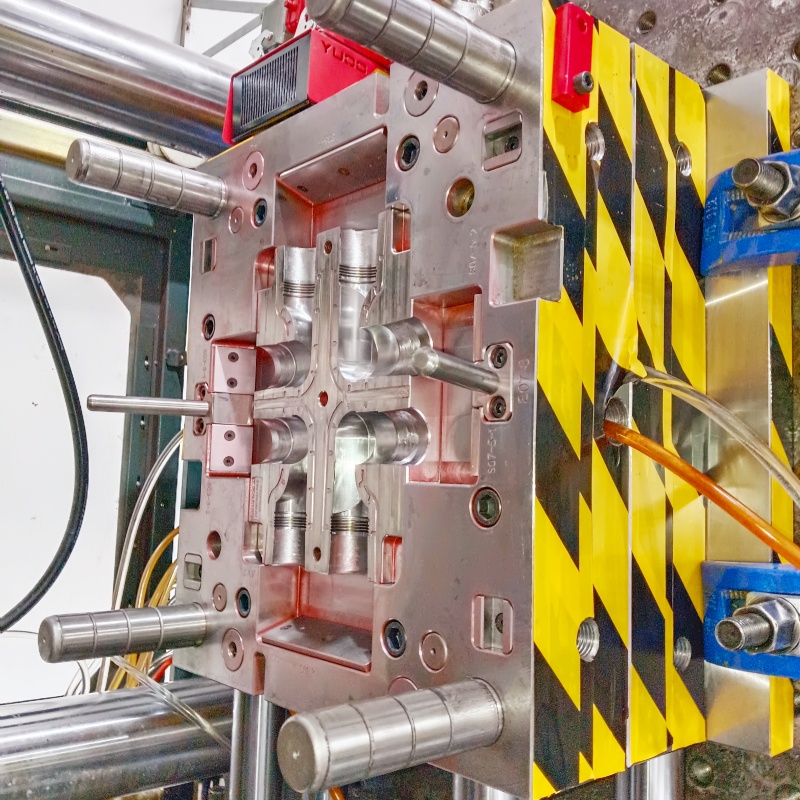
Security Products Injection Mold
Beschreibung der Form
|
Name
|
Kunststoff-Injeziationsform |
| Material der Form | P20, NAK80, SKD11, S316, S50C,Nr. S45C,718H,718 ,1.2344, Per customer's requirement |
| Formbasis | LKM, HASCO, DME or Per customer's requirement |
| Art der Kunststoffform | 3-Plattenform,2-Plattenform |
| Hohlraum | Einzel-/Mehrfachkavität ,1*1,1+1,1*2,1+1+1,etc |
| Position des Tores | Lüfter-Klappe,Unter-Tor,Pin-Point-Tor,Heißkanal-Nadelverschluss,Öffnen Sie Nozzel |
| Auswurfsystem | Abstreifplatte,Lifter,Schiebestange,Auswurfstift usw. |
| Läufer | Heiß/kalter Typ |
| Kunststoff-Harz-Material | ABS+PC,HDPE, PP, Nylon, SPÄHEN, LDPE, BAUCHMUSKELN, Styrol, Acryl, Acetal, PE, PTFE, PEI, und SPE |
| Lebensdauer der Form | 300,000-500,000-1,000,000 Schüsse |
| Vorlaufzeit | 25-35 Tage nach Erhalt der Anzahlung / und Genehmigung des Formdesigns durch den Kunden |
| Spezifikation | Folgen Sie der 3D-Endzeichnung |
| Details zur Verpackung |
Abdeckung mit Folie für Rostschutz und verpackt mit Holzkiste
|
Details zur Teileproduktion
| Produktmaterial | BAUCHMUSKELN,WIE,PP,PPS,PC,PE,POM,PMMA,PS,HDPE,TPE,TPU usw. |
| Oberflächengüte | Polieren,Textur-Finish,Glänzendes Finish,Gemälde,Slik Druck,Gummilackierung usw. |
| Mindestbestellmenge | 500 PCS |
| Details zur Verpackung | Carton box or wooden Case upon product weight and customer's requirements. |
| Versand | Auf dem Seeweg ,mit dem Zug ,oder auf dem Luftweg nach Kundenwunsch |
| Exportland | Janpan,Europa,USA,Mexiko,Australien,Naher Osten,Korea,Asien usw. |
| Typisch für | Gehäuse, Container, Mützen, Zubehör,einschließlich wie folgt Gehäuse für Elektrowerkzeuge, Einwegrasierer, Elektrische Schalter,Kisten/RecyclingboxenArmaturenbretter für die Automobilindustrie,TV-Schränke,Einheiten zur Inhalation von Drogen,Stoßstangen für Kraftfahrzeuge,Mülltonnen auf Müll ,Spritzen,Telefonhörer ,Spülschalen,DVDs,Flaschendeckel/-verschlüsse,Batteriegehäuse |
| Bandbreite der Märkte | Unterhaltungselektronik,Industrielle Produkte, , Lebensmittelverarbeitung, Luftfahrt, Dichtungen/Dichtungen, Beleuchtung, Verpackung, Filter,Gesundheitswesen, Telekommunikation, mechanisch, Wasseraufbereitung, Gerät, Erholung,Rasen und Garten, erzieherisch, Öl und Gas, Regierung, Konstruktion,Klempnerei, Überwachung, Pumps, Marinesoldat, Motoren, Getriebe, RFID-Etiketten, Elektronik,und Befestigungselemente. |
- Beschreibung
Security Products Injection Mold: Design, Manufacturing, and Quality Assurance
Injection molding is a critical technology in the production of security products, allowing manufacturers to produce high-precision plastic components with consistent quality, durability, and intricate designs. From electronic housings, key fobs, security tags, and access control devices to locks and surveillance enclosures, injection molding ensures that security products meet rigorous functional, aesthetic, and safety standards.
This article explores the key aspects of security products injection mold, including design principles, material selection, manufacturing processes, assembly, and quality assurance measures that guarantee reliable and long-lasting security products.
1. Introduction to Security Products Injection Mold
Injection molding is the process of injecting molten plastic into a mold cavity, where it cools and solidifies to form a precise shape. For security products, this process is particularly important due to the combination of mechanical strength, precision features, and aesthetic appearance required.
The main objectives of security products injection mold are:
- Precision: High dimensional accuracy for locks, housings, and components.
- Strength and durability: Resistance to tampering, impact, and environmental factors.
- Consistency: Repeatable quality for high-volume production.
- Aesthetic finish: Smooth surfaces for professional appearance and branding.
Injection molding allows manufacturers to produce complex shapes with tight tolerances and integrate features like ribs, threads, and snap-fits directly into the mold.
2. Mold Design Considerations
The success of security products injection mold starts with careful mold design. Mold design directly affects product quality, cycle time, and production efficiency.
2.1 Core Elements of Mold Design
- Cavity design: Defines the final shape of the part. Precision cavities ensure proper fit for moving components, buttons, or electronic modules.
- Gate and runner system: Controls the flow of molten plastic to ensure complete filling without defects. Proper gate location reduces stress and shrinkage.
- Auswurfsystem: Enables safe and consistent removal of the molded part without damage. Auswerferstifte, plates, or sleeves are carefully placed to avoid cosmetic flaws.
- Cooling channels: Efficient cooling ensures uniform part solidification, minimizing warpage and cycle time.
2.2 Material and Feature Considerations
- Wall thickness: Uniform wall thickness reduces stress and improves dimensional stability.
- Ribs and bosses: Provide structural strength while minimizing material use.
- Undercuts and snap-fits: Allow functional features without additional assembly.
A well-designed mold ensures that security product components are durable, precise, and visually consistent.
3. Material Selection for Security Products
Material selection is a critical aspect of security products injection mold. The chosen material must balance strength, durability, and functional performance.
3.1 Common Materials
- BAUCHMUSKELN (Acrylonitrile Butadiene Styrene): Good impact resistance, rigidity, and surface finish. Widely used for electronic housings and key fobs.
- Polycarbonate (PC): Excellent mechanical strength and transparency; ideal for enclosures requiring tamper resistance.
- Nylon (PA): Strong, wear-resistant, suitable for moving parts or components exposed to friction.
- PP (Polypropylene): Lightweight, chemical-resistant, used in non-critical housings or disposable tags.
3.2 Additives for Security Applications
- UV stabilizers: Prevent degradation from sunlight exposure.
- Flame retardants: Required for electronic enclosures to meet safety standards.
- Glass fibers: Enhance mechanical strength and rigidity for tamper-resistant parts.
Proper material selection ensures that security products meet functional and environmental requirements.
4. Injection Molding Process
The core of security products injection mold is the injection molding process itself. It involves several key steps:
4.1 Plastic Melting and Injection
Plastic pellets are heated to a molten state and injected into the mold under high pressure. Precise control of temperature, pressure, and injection speed ensures full cavity filling without voids or defects.
4.2 Cooling and Solidification
Once the mold is filled, the part is cooled to solidify. Cooling must be uniform to prevent warping, shrinkage, or dimensional deviations, which are critical for components like locks or electronic housings.
4.3 Part Ejection
After cooling, ejector pins or plates remove the part from the mold. Proper design prevents scratches, marks, or deformation.
4.4 Secondary Operations
Some security product components may require secondary operations such as:
- Trimming or deflashing to remove excess material.
- Inserting metal contacts, electronic modules, or screws.
- Applying adhesive or sealing elements for waterproof or tamper-proof features.
5. Assembly of Security Products
After injection molding, components are assembled into complete security products. Assembly methods depend on product complexity.
5.1 Mechanical Fastening
- Screws or bolts join multiple molded parts.
- Inserts or threaded components allow repeated assembly and disassembly.
5.2 Adhesive Bonding
- Epoxy or polyurethane adhesives bond parts permanently.
- Provides additional tamper resistance for critical components.
5.3 Snap-Fit or Press-Fit
- Integral snap-fit features in the molded parts reduce assembly time.
- Press-fit metal contacts or mechanical inserts add functional features without additional fasteners.
5.4 Decorative Finishes
Some security products require logos, labels, or leather overlays for branding or aesthetics. Techniques include:
- Hot stamping logos or patterns.
- Applying 3M tape or adhesive films for protective or decorative surfaces.
6. Quality Assurance in Security Products Injection Mold
Quality control is essential for security products injection mold, as these products must meet stringent functional and safety requirements.
6.1 Visual and Dimensional Inspection
- Ensure no warping, flash, or surface defects.
- Verify dimensions using calipers, gauges, or CMM (Coordinate Measuring Machines).
6.2 Functional Testing
- Check snap-fit components, electronic module integration, and moving parts for smooth operation.
- Test tamper-resistance and mechanical strength of housings and enclosures.
6.3 Environmental Testing
- Exposure to heat, humidity, UV, or chemical agents simulates real-world usage.
- Verifies material stability and assembly integrity.
6.4 Process Control
- Maintain consistent temperature, injection pressure, and cycle times for repeatable production.
- Statistical process control (SPC) helps monitor and improve production quality.
7. Advantages of Injection Molded Security Products
Using injection molding for security products offers multiple benefits:
- High precision: Critical for functional parts like locks, keypads, and housings.
- Repeatable quality: Large volumes can be produced with consistent dimensions and strength.
- Material efficiency: Minimal waste through careful mold and process design.
- Design flexibility: Complex shapes, snap-fits, ribs, and integrated features can be molded directly.
- Durability: Properly selected materials withstand tampering, impact, and environmental conditions.
8. Applications of Security Products Injection Mold
Injection molded plastic components are widely used in security and access control products:
- Electronic key fobs: Durable plastic housings with internal electronics.
- Smart locks: Precise molded parts for mechanical and electronic assemblies.
- Security tags: Theft-prevention tags for retail or logistics.
- Surveillance enclosures: Protective cases for cameras and sensors.
- Access control devices: Keypads, card readers, or RFID housings.
Injection molding ensures these products are robust, reliable, and cost-effective for mass production.
9. Innovations in Security Products Injection Mold
Manufacturers continuously innovate to enhance security product performance:
- Multi-material molding: Combines rigid and flexible plastics for functional features like buttons or seals.
- Overmolding: Adds soft-touch surfaces or tamper-resistant elements.
- Embedded electronics: Allows molded components to integrate LEDs, sensors, or RFID chips.
- Decorative finishes: Hot stamping, 3M tape, or printed overlays enhance branding and aesthetics.
10. Conclusion
Security products injection mold is a vital technology that combines precision engineering, material science, and advanced manufacturing to produce durable, high-quality security components. From mold design, material selection, and injection molding, to assembly, secondary operations, and quality assurance, each step ensures products meet stringent functional, aesthetic, and safety standards.
Injection molded security products offer reliability, cost-effectiveness, and design flexibility, making them ideal for key fobs, locks, electronic housings, access control devices, and surveillance components. By following best practices in mold design, material selection, process control, and assembly, manufacturers can deliver secure, high-performance products for a wide range of industries.
Sicherheitsprodukt
ANFRAGE SENDEN
Verwandte Produkte

© 2025 www.tpi-mould.com. All rights reserved by Top Notch Mold & Tool Co'Ltd
Powered by Wpboss