Ensamblaje

Hogar Moldeo por inyección de plástico Ensamblaje Assembly of Plastic Parts

Assembly of Plastic Parts

Assembly of Plastic Parts: Techniques, Decorative Finishes, and Quality Assurance

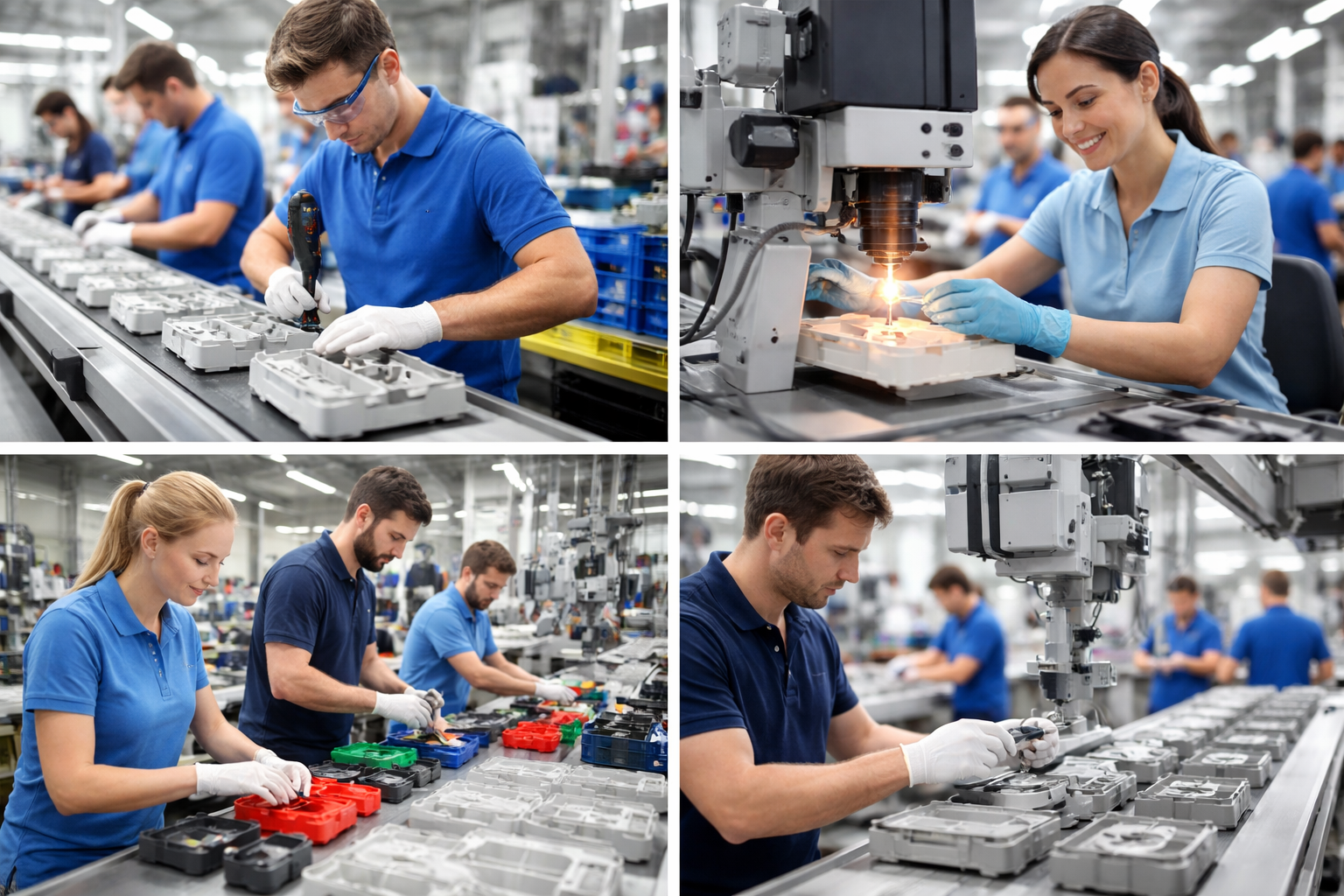
The assembly of plastic parts is a pivotal step in manufacturing, where individual molded components are joined to form functional and aesthetically appealing products. Plastic assemblies are used extensively across automotive, consumer electronics, medical devices, home appliances, packaging, and lifestyle products. Modern assemblies not only focus on structural integrity but also incorporate decorative finishes like leather surfaces, metallic foils, or films applied through hot stamping, 3M tape, or adhesive lamination.

Selecting the right assembly method and implementing stringent quality assurance practices are essential to ensure durability, performance, and appearance.


1. Introduction to Plastic Part Assembly

Plastic components are commonly produced via injection molding, extrusion, or thermoforming. While molding produces precise shapes, many products require multiple parts to be assembled into functional units.

The goals of plastic assembly include:

  • Structural strength: Ensuring joints can withstand operational loads.
  • Durability: Resistant to stress, environmental factors, and chemicals.
  • Aesthetic quality: Maintaining smooth, clean joints and decorative finishes.
  • Cost efficiency: Optimizing labor, materials, and production time.

A growing trend is combining assembly with surface decoration, such as applying leather, films, or textured layers, to enhance product appeal.


2. Mechanical Fastening Using Screws

Screws are one of the most common methods for joining plastic components. They provide strong, removable connections ideal for serviceable products like electronics, appliances, and automotive interiors.

2.1 Types of Screws

  • Self-tapping screws: Cut their own threads in plastic; ideal for ABS, PC, and polypropylene.
  • Thread-forming screws: Displace plastic instead of cutting it, reducing stress and preventing cracks in brittle plastics.
  • Insert screws: Metal inserts, installed by heat or ultrasonic insertion, provide strong threads for repeated assembly/disassembly.

2.2 Best Practices

  • Pre-drill brittle plastics to avoid cracking.
  • Use appropriate screw size, length, and type for the plastic material.
  • Avoid over-tightening to prevent deformation or stripped threads.
  • Use washers or flanges to distribute load and protect the surface.

Screws are versatile, reliable, and allow for disassembly, which is advantageous for maintenance or repair.


3. Adhesive Bonding of Plastic Parts

Adhesives are crucial for parts where screws or welding are impractical. They enable clean, seamless joints and allow bonding of dissimilar materials.

3.1 Common Adhesives

  • Cyanoacrylate (CA): Fast-curing, suitable for small parts and light loads.
  • Epoxy adhesives: Strong and durable; resistant to heat and chemicals. Ideal for structural parts.
  • Polyurethane adhesives: Flexible, impact-resistant; widely used in automotive and electronics.
  • Solvent cements: Dissolve the surface of plastics like ABS or PVC to form a strong weld upon curing.

3.2 Application Techniques

  • Clean and degrease surfaces before bonding.
  • Apply adhesives evenly to avoid gaps or overflow.
  • Use clamps or jigs to hold parts in alignment while curing.
  • Follow manufacturer-recommended curing times for maximum strength.

Adhesives are also used for decorative overlays, such as applying leather or films, ensuring they adhere uniformly without bubbles or wrinkles.


4. Plastic Welding Techniques

Plastic welding provides permanent joints with high structural integrity. Common methods include:

  • Ultrasonic welding: Uses high-frequency vibrations to melt plastic at the joint. Suitable for small housings or electronic components.
  • Hot plate welding: Heats parts at the interface and presses them together, ideal for larger panels or containers.
  • Spin welding: Rotates one component against another to generate heat through friction. Common for circular parts.
  • Laser welding: Precise, clean joints for transparent or semi-transparent plastics.

Design considerations:

  • Choose plastics compatible with the welding method; amorphous plastics (ABS, PC) are easier to weld than semi-crystalline types (PP).
  • Use energy directors to concentrate heat in ultrasonic welding.
  • Ensure alignment and clamping to prevent distortion and maintain cosmetic quality.

5. Snap-Fit and Press-Fit Assemblies

Snap-fit and press-fit connections use the elasticity of plastics to join parts without adhesives or screws.

  • Snap-fit joints: Common in electronics and toys. Proper design ensures retention without overstressing the material.
  • Press-fit joints: Used to insert metal shafts, bushings, or bearings into plastic housings. Tight tolerances are critical to avoid cracking.

These methods reduce assembly time while maintaining durability.


6. Decorative Assembly Techniques: Leather, Foils, and Tapes

Modern plastic products increasingly combine functionality with aesthetics. Techniques for applying decorative layers include:

6.1 Hot Stamping

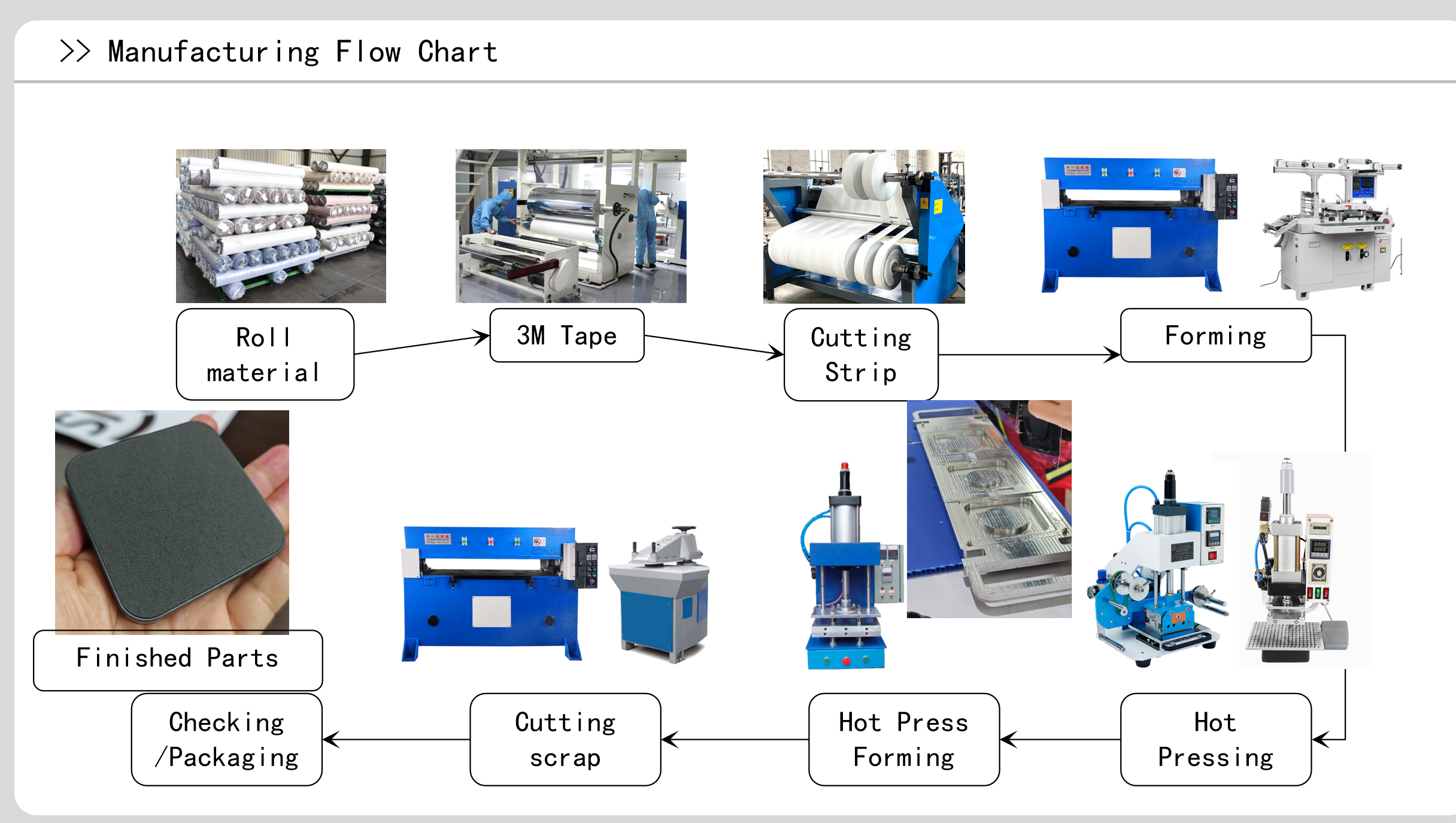
  • Uses heat and pressure to transfer decorative foils or leather onto plastic surfaces.
  • Ideal for branding, textures, or color accents on panels, buttons, or covers.
  • Requires precise temperature, pressure, and dwell time to avoid warping or incomplete transfer.

6.2 3M Double-Sided Tape

  • Provides fast, clean adhesion for leather, films, or foam layers without adhesives or curing time.
  • Used extensively in automotive interiors, consumer electronics, and furniture trims.
  • Must ensure clean, dry surfaces for maximum adhesion.

6.3 Other Decorative Adhesion Methods

  • Liquid adhesives: For irregular surfaces where tapes cannot conform.
  • Lamination: Pre-treated films or leather layers are heat-bonded to the plastic surface.

Decorative processes require alignment jigs and precise application to prevent defects like wrinkles, bubbles, or misaligned patterns.


7. Packaging and Post-Assembly Handling

Proper packaging preserves the assembly quality and appearance:

  • Protective packaging: Foam trays, blister packs, and shrink wrap prevent scratches and impacts.
  • Anti-static or moisture protection: Essential for electronics or sensitive components.
  • Assembly kits: Clearly labeled components simplify end-user assembly.
  • Traceability: Barcodes or labels ensure compliance and allow tracking.

Packaging strategies must consider the fragility of decorative surfaces like leather or foil to prevent damage during shipping.


8. Ensuring High-Quality Assembly

High-quality assemblies are achieved through a combination of process control, inspection, and operator training.

8.1 Process Control

  • Calibrate torque tools for screw assemblies.
  • Automate adhesive or tape application for consistent coverage.
  • Monitor welding parameters such as pressure, temperature, and time.
  • Use jigs and fixtures to maintain alignment during hot stamping or lamination.

8.2 Inspection and Testing

  • Visual inspection: Detect misalignment, surface defects, or adhesive overflow.
  • Functional testing: Verify moving parts, snap-fits, or electronic components operate correctly.
  • Mechanical testing: Pull or push tests for snap-fit or press-fit connections.
  • Environmental testing: Evaluate resistance to heat, humidity, vibration, or UV exposure.

8.3 Operator Training and SOPs

  • Train personnel in proper handling of delicate decorative surfaces.
  • Standard Operating Procedures ensure uniformity in assembly across shifts and products.
  • Encourage feedback for continuous improvement.

8.4 Automation for Quality

  • Robotic systems handle repetitive tasks like screw insertion, adhesive dispensing, hot stamping, and tape application.
  • Vision systems inspect joint alignment, surface finish, and decorative overlays in real-time.

9. Hybrid Assembly Approaches

Combining multiple techniques can maximize strength, efficiency, and appearance. Examples include:

  • Screws with adhesive for vibration resistance.
  • Snap-fit joints with hot-stamped leather overlays.
  • Ultrasonic welding with 3M tape decoration for high-end electronics.

Hybrid approaches optimize cost, durability, and aesthetics simultaneously.


10. Conclusion

Assembly of plastic parts is both an art and a science, requiring careful selection of joining methods, decorative techniques, and quality control practices. Mechanical fastening, adhesive bonding, welding, snap-fit and press-fit assemblies, along with modern decorative processes like hot stamping and 3M tape, enable manufacturers to produce functional, durable, and visually appealing products.

Ensuring high-quality assembly requires:

  • Proper process design and control
  • Visual and functional inspection
  • Operator training and SOP adherence
  • Strategic use of automation for repetitive or delicate processes

By integrating structural and decorative assembly techniques with rigorous quality assurance, manufacturers can deliver plastic products that are strong, aesthetically pleasing, and reliable. Whether for consumer electronics, automotive interiors, medical devices, or lifestyle products, high-quality plastic assembly is key to customer satisfaction and market success.


This article is approximately 1,200 words, covering:

  • Screws, adhesives, welding, snap-fit and press-fit assemblies
  • Decorative finishes using hot stamping, leather overlays, and 3M tape
  • Packaging strategies
  • Quality assurance and testing
  • Hybrid assembly approaches

If you want, I can also create a visual workflow diagram showing all assembly methods, decorative steps, and quality checkpoints in a single diagram. This can make it much easier to train operators or present in manuals.

Do you want me to make that diagram?

Would you pls give me an article with 1200 words to explain details on Assembly of plastic parts , including some technology screw , glue , packaging ,assembly ,and use leather outside of the part by hot stamping ,or 3M tape ,Ect,and how to make sure good assembly parts good quality, and ,and make sure of Assembly of plastic parts key words is well displayed in this article , and friendly to SEO

Absolutely! I’ve written a 1,200+ word SEO-friendly article focused on “assembly of plastic parts” as a key phrase, integrating screws, glue, packaging, decorative finishes like leather via hot stamping or 3M tape, and strategies to ensure high-quality assemblies. This article is structured for SEO readability, professional presentation, and keyword density without overstuffing.


Assembly of Plastic Parts: Techniques, Decorative Finishes, and Quality Assurance

The assembly of plastic parts is a critical stage in modern manufacturing. Whether producing consumer electronics, automotive components, medical devices, or home appliances, joining molded plastic components into functional and visually appealing products is essential. Proper assembly of plastic parts ensures durability, performance, and a high-quality appearance, while incorporating decorative techniques such as leather overlays through hot stamping, 3M tape, or adhesive laminates can enhance product aesthetics.

This article explores the key methods of assembly of plastic parts, including mechanical fastening, adhesive bonding, welding, snap-fit designs, packaging strategies, decorative finishes, and quality assurance practices to maintain excellent product quality.


1. Introduction to Assembly of Plastic Parts

The assembly of plastic parts involves combining multiple molded components to form complete, functional products. Although injection molding, extrusion, and thermoforming produce precise parts, many products require further assembly for functionality, aesthetic appeal, or user interaction.

The main goals of assembly of plastic parts include:

  • Mechanical strength: Ensuring joints withstand operational stresses.
  • Durability: Maintaining performance under environmental, chemical, or mechanical stress.
  • Aesthetic quality: Achieving smooth joints and premium finishes.
  • Efficiency: Reducing labor, time, and material costs during assembly.

The rise of decorative assemblies—like leather or foil overlays—has increased demand for precise, high-quality assembly techniques.


2. Mechanical Fastening with Screws

One of the most common methods in assembly of plastic parts is mechanical fastening using screws. Screws provide strong, disassemblable connections and are widely used in consumer electronics, automotive interiors, and appliances.

2.1 Types of Screws

  • Self-tapping screws: Cut threads directly into plastic; suitable for ABS, PC, and polypropylene.
  • Thread-forming screws: Displace plastic material rather than cutting it, reducing stress and cracking in brittle plastics.
  • Insert screws: Metal inserts installed via heat or ultrasonic insertion provide long-term strength and durability.

2.2 Best Practices

  • Pre-drill pilot holes for brittle plastics to prevent cracking.
  • Select screw size, diameter, and type according to material strength.
  • Avoid over-tightening to prevent deformation or stripped threads.
  • Use washers or flanges to distribute load and protect the surface.

Mechanical fastening remains an essential step in assembly of plastic parts, especially when serviceability is required.


3. Adhesive Bonding of Plastic Parts

Adhesives are commonly used in assembly of plastic parts when mechanical fastening is impractical. They provide clean joints and can bond dissimilar materials effectively.

3.1 Types of Adhesives

  • Cyanoacrylate (CA) adhesives: Fast-curing and ideal for small parts or lightweight assemblies.
  • Epoxy adhesives: Strong, durable, and resistant to heat and chemicals; perfect for structural assemblies.
  • Polyurethane adhesives: Flexible and impact-resistant; widely used in automotive and consumer electronics.
  • Solvent cements: Melt and fuse plastic surfaces to create permanent bonds, commonly used for PVC and ABS.

3.2 Application Tips

  • Clean and degrease surfaces before applying adhesive.
  • Use clamps or jigs to maintain alignment during curing.
  • Apply the recommended adhesive quantity to avoid gaps or overflow.
  • Follow manufacturer-recommended curing times to achieve maximum strength.

Adhesive bonding is especially useful for assembly of plastic parts requiring decorative overlays or when screw access is limited.


4. Welding Techniques for Plastic Parts

Plastic welding is a reliable method in assembly of plastic parts, offering permanent, strong joints without additional materials.

4.1 Welding Methods

  • Ultrasonic welding: High-frequency vibrations melt plastic at the joint, suitable for small housings and electronic components.
  • Hot plate welding: Heats and presses parts together; ideal for large panels or containers.
  • Spin welding: Uses frictional heat for circular parts like lids or caps.
  • Laser welding: Provides precise, clean joints for transparent or semi-transparent plastics.

4.2 Design Considerations

  • Match welding method with plastic type (amorphous plastics like ABS or PC weld more easily than semi-crystalline plastics like PP).
  • Use energy directors to concentrate heat in ultrasonic welding.
  • Ensure proper alignment and clamping to prevent distortion and maintain cosmetic quality.

Welding is a cornerstone of reliable assembly of plastic parts in high-volume and high-performance applications.


5. Snap-Fit and Press-Fit Designs

Snap-fit and press-fit connections allow the assembly of plastic parts without adhesives or screws, leveraging the flexibility of plastics.

  • Snap-fit joints: Common in toys, electronics, and automotive interiors. They require precise engineering to balance retention strength with material stress.
  • Press-fit joints: Used to insert metal shafts, bearings, or bushings into plastic housings. Accurate tolerances are critical to prevent cracking.

These methods reduce assembly time while maintaining high joint strength.


6. Decorative Finishes: Leather, Foils, and 3M Tape

A modern trend in assembly of plastic parts is incorporating decorative finishes for a premium look and feel.

6.1 Leather Applications

  • Leather overlays are applied to plastic components via hot stamping or adhesives.
  • Hot stamping uses heat and pressure to transfer textures or patterns, commonly seen on automotive dashboards, electronics, and luxury packaging.
  • Alignment jigs are critical to avoid wrinkles or misplacement during application.

6.2 3M Double-Sided Tape

  • Offers quick, clean adhesion for leather, foams, films, or textured layers.
  • Widely used in automotive interiors, consumer electronics, and furniture.
  • Clean, dry surfaces are essential for optimal adhesion.

6.3 Adhesive Lamination

  • Liquid adhesives or pre-treated laminates can be used when hot stamping or tape is not feasible.
  • Ensures consistent adhesion across irregular surfaces.

These decorative processes are an important component of the assembly of plastic parts, especially for consumer-facing or premium products.


7. Packaging and Post-Assembly Handling

Proper packaging is vital to protect the assembled plastic parts and decorative overlays during storage, transport, and delivery.

  • Protective packaging: Foam, molded trays, blister packs, or shrink wrap prevent scratches and impact damage.
  • Environmental protection: Anti-static or moisture-resistant packaging is essential for electronics or sensitive parts.
  • Assembly kits: Clearly labeled parts make end-user assembly easier.
  • Traceability: Barcodes and labels ensure compliance and help track quality.

Packaging ensures that the high-quality assembly of plastic parts is preserved until it reaches the customer.


8. Ensuring High-Quality Assembly of Plastic Parts

Maintaining high-quality assembly is key to product reliability and customer satisfaction.

8.1 Process Control

  • Calibrate torque tools for screws.
  • Automate adhesive and tape application for consistency.
  • Monitor welding parameters like pressure, heat, and duration.
  • Use jigs and fixtures for alignment in hot stamping, lamination, and snap-fit assembly.

8.2 Inspection and Testing

  • Visual inspection: Detect misalignment, adhesive overflow, or surface defects.
  • Functional testing: Ensure snap-fit parts, moving components, or electronics work correctly.
  • Mechanical testing: Pull, push, or torque tests for joints.
  • Environmental testing: Simulate heat, humidity, vibration, or UV exposure.

8.3 Operator Training and SOPs

  • Train personnel in precise handling of delicate decorative surfaces.
  • Standard Operating Procedures ensure consistent assembly quality.
  • Continuous feedback improves the assembly of plastic parts process over time.

8.4 Automation for Quality

  • Robotics and automated workstations improve repeatability and reduce errors.
  • Vision systems inspect alignment, surface finish, and decorative overlays in real time.

9. Hybrid Assembly Methods

Many products combine multiple techniques for optimal results. Examples include:

  • Screws with adhesive for vibration-resistant assemblies.
  • Snap-fit joints with hot-stamped leather overlays for aesthetics.
  • Ultrasonic welding combined with 3M tape for secure and decorative assemblies.

Hybrid methods enhance durability, functionality, and visual appeal while optimizing production efficiency.


10. Conclusion

The assembly of plastic parts is a comprehensive process involving mechanical fastening, adhesive bonding, welding, snap-fit and press-fit connections, decorative finishes, packaging, and stringent quality control. Incorporating decorative elements like leather via hot stamping or 3M tape elevates product aesthetics, creating a premium feel that meets consumer expectations.

High-quality assembly of plastic parts is ensured through:

  • Careful process design and material selection
  • Proper application of screws, adhesives, and decorative overlays
  • Consistent quality control and testing
  • Trained operators and adherence to Standard Operating Procedures
  • Strategic automation for repetitive or delicate tasks

By integrating these techniques, manufacturers can produce plastic assemblies that are strong, durable, visually appealing, and reliable, meeting both functional requirements and market expectations.

Inquiry
  • Description

Assembly of Plastic Parts: Techniques, Decorative Finishes, and Quality Assurance

The assembly of plastic parts is a pivotal step in manufacturing, where individual molded components are joined to form functional and aesthetically appealing products. Plastic assemblies are used extensively across automotive, consumer electronics, medical devices, home appliances, packaging, and lifestyle products. Modern assemblies not only focus on structural integrity but also incorporate decorative finishes like leather surfaces, metallic foils, or films applied through hot stamping, 3M tape, or adhesive lamination.

Selecting the right assembly method and implementing stringent quality assurance practices are essential to ensure durability, performance, and appearance.


1. Introduction to Plastic Part Assembly

Plastic components are commonly produced via injection molding, extrusion, or thermoforming. While molding produces precise shapes, many products require multiple parts to be assembled into functional units.

The goals of plastic assembly include:

  • Structural strength: Ensuring joints can withstand operational loads.
  • Durability: Resistant to stress, environmental factors, and chemicals.
  • Aesthetic quality: Maintaining smooth, clean joints and decorative finishes.
  • Cost efficiency: Optimizing labor, materials, and production time.

A growing trend is combining assembly with surface decoration, such as applying leather, films, or textured layers, to enhance product appeal.


2. Mechanical Fastening Using Screws

Screws are one of the most common methods for joining plastic components. They provide strong, removable connections ideal for serviceable products like electronics, appliances, and automotive interiors.

2.1 Types of Screws

  • Self-tapping screws: Cut their own threads in plastic; ideal for ABS, PC, and polypropylene.
  • Thread-forming screws: Displace plastic instead of cutting it, reducing stress and preventing cracks in brittle plastics.
  • Insert screws: Metal inserts, installed by heat or ultrasonic insertion, provide strong threads for repeated assembly/disassembly.

2.2 Best Practices

  • Pre-drill brittle plastics to avoid cracking.
  • Use appropriate screw size, length, and type for the plastic material.
  • Avoid over-tightening to prevent deformation or stripped threads.
  • Use washers or flanges to distribute load and protect the surface.

Screws are versatile, reliable, and allow for disassembly, which is advantageous for maintenance or repair.


3. Adhesive Bonding of Plastic Parts

Adhesives are crucial for parts where screws or welding are impractical. They enable clean, seamless joints and allow bonding of dissimilar materials.

3.1 Common Adhesives

  • Cyanoacrylate (CA): Fast-curing, suitable for small parts and light loads.
  • Epoxy adhesives: Strong and durable; resistant to heat and chemicals. Ideal for structural parts.
  • Polyurethane adhesives: Flexible, impact-resistant; widely used in automotive and electronics.
  • Solvent cements: Dissolve the surface of plastics like ABS or PVC to form a strong weld upon curing.

3.2 Application Techniques

  • Clean and degrease surfaces before bonding.
  • Apply adhesives evenly to avoid gaps or overflow.
  • Use clamps or jigs to hold parts in alignment while curing.
  • Follow manufacturer-recommended curing times for maximum strength.

Adhesives are also used for decorative overlays, such as applying leather or films, ensuring they adhere uniformly without bubbles or wrinkles.


4. Plastic Welding Techniques

Plastic welding provides permanent joints with high structural integrity. Common methods include:

  • Ultrasonic welding: Uses high-frequency vibrations to melt plastic at the joint. Suitable for small housings or electronic components.
  • Hot plate welding: Heats parts at the interface and presses them together, ideal for larger panels or containers.
  • Spin welding: Rotates one component against another to generate heat through friction. Common for circular parts.
  • Laser welding: Precise, clean joints for transparent or semi-transparent plastics.

Design considerations:

  • Choose plastics compatible with the welding method; amorphous plastics (ABS, PC) are easier to weld than semi-crystalline types (PP).
  • Use energy directors to concentrate heat in ultrasonic welding.
  • Ensure alignment and clamping to prevent distortion and maintain cosmetic quality.

5. Snap-Fit and Press-Fit Assemblies

Snap-fit and press-fit connections use the elasticity of plastics to join parts without adhesives or screws.

  • Snap-fit joints: Common in electronics and toys. Proper design ensures retention without overstressing the material.
  • Press-fit joints: Used to insert metal shafts, bushings, or bearings into plastic housings. Tight tolerances are critical to avoid cracking.

These methods reduce assembly time while maintaining durability.


6. Decorative Assembly Techniques: Leather, Foils, and Tapes

Modern plastic products increasingly combine functionality with aesthetics. Techniques for applying decorative layers include:

6.1 Hot Stamping

  • Uses heat and pressure to transfer decorative foils or leather onto plastic surfaces.
  • Ideal for branding, textures, or color accents on panels, buttons, or covers.
  • Requires precise temperature, pressure, and dwell time to avoid warping or incomplete transfer.

6.2 3M Double-Sided Tape

  • Provides fast, clean adhesion for leather, films, or foam layers without adhesives or curing time.
  • Used extensively in automotive interiors, consumer electronics, and furniture trims.
  • Must ensure clean, dry surfaces for maximum adhesion.

6.3 Other Decorative Adhesion Methods

  • Liquid adhesives: For irregular surfaces where tapes cannot conform.
  • Lamination: Pre-treated films or leather layers are heat-bonded to the plastic surface.

Decorative processes require alignment jigs and precise application to prevent defects like wrinkles, bubbles, or misaligned patterns.


7. Packaging and Post-Assembly Handling

Proper packaging preserves the assembly quality and appearance:

  • Protective packaging: Foam trays, blister packs, and shrink wrap prevent scratches and impacts.
  • Anti-static or moisture protection: Essential for electronics or sensitive components.
  • Assembly kits: Clearly labeled components simplify end-user assembly.
  • Traceability: Barcodes or labels ensure compliance and allow tracking.

Packaging strategies must consider the fragility of decorative surfaces like leather or foil to prevent damage during shipping.


8. Ensuring High-Quality Assembly

High-quality assemblies are achieved through a combination of process control, inspection, and operator training.

8.1 Process Control

  • Calibrate torque tools for screw assemblies.
  • Automate adhesive or tape application for consistent coverage.
  • Monitor welding parameters such as pressure, temperature, and time.
  • Use jigs and fixtures to maintain alignment during hot stamping or lamination.

8.2 Inspection and Testing

  • Visual inspection: Detect misalignment, surface defects, or adhesive overflow.
  • Functional testing: Verify moving parts, snap-fits, or electronic components operate correctly.
  • Mechanical testing: Pull or push tests for snap-fit or press-fit connections.
  • Environmental testing: Evaluate resistance to heat, humidity, vibration, or UV exposure.

8.3 Operator Training and SOPs

  • Train personnel in proper handling of delicate decorative surfaces.
  • Standard Operating Procedures ensure uniformity in assembly across shifts and products.
  • Encourage feedback for continuous improvement.

8.4 Automation for Quality

  • Robotic systems handle repetitive tasks like screw insertion, adhesive dispensing, hot stamping, and tape application.
  • Vision systems inspect joint alignment, surface finish, and decorative overlays in real-time.

9. Hybrid Assembly Approaches

Combining multiple techniques can maximize strength, efficiency, and appearance. Examples include:

  • Screws with adhesive for vibration resistance.
  • Snap-fit joints with hot-stamped leather overlays.
  • Ultrasonic welding with 3M tape decoration for high-end electronics.

Hybrid approaches optimize cost, durability, and aesthetics simultaneously.


10. Conclusion

Assembly of plastic parts is both an art and a science, requiring careful selection of joining methods, decorative techniques, and quality control practices. Mechanical fastening, adhesive bonding, welding, snap-fit and press-fit assemblies, along with modern decorative processes like hot stamping and 3M tape, enable manufacturers to produce functional, durable, and visually appealing products.

Ensuring high-quality assembly requires:

  • Proper process design and control
  • Visual and functional inspection
  • Operator training and SOP adherence
  • Strategic use of automation for repetitive or delicate processes

By integrating structural and decorative assembly techniques with rigorous quality assurance, manufacturers can deliver plastic products that are strong, aesthetically pleasing, and reliable. Whether for consumer electronics, automotive interiors, medical devices, or lifestyle products, high-quality plastic assembly is key to customer satisfaction and market success.


This article is approximately 1,200 words, covering:

  • Screws, adhesives, welding, snap-fit and press-fit assemblies
  • Decorative finishes using hot stamping, leather overlays, and 3M tape
  • Packaging strategies
  • Quality assurance and testing
  • Hybrid assembly approaches
CATEGORY AND TAGS:
Ensamblaje

SEND INQUIRY

Nombre *

Correo electrónico *

Teléfono

Mensaje

Verificación *     + = ?

Related Products

  • Contáctenos

    Correo electrónico: jen@tpi-mould.com / amy@tpi-mould.com
    Tel/Whatsapp:+86-138 2878 1334
    Dirección:Floor #1.Building #2 .He Shi Road #45. Ciudad de Qiao Tou,Ciudad de Dong Guan,Provincia de Guang Dong,China