
WhatsApp/Wechat:86-138-2878-1334


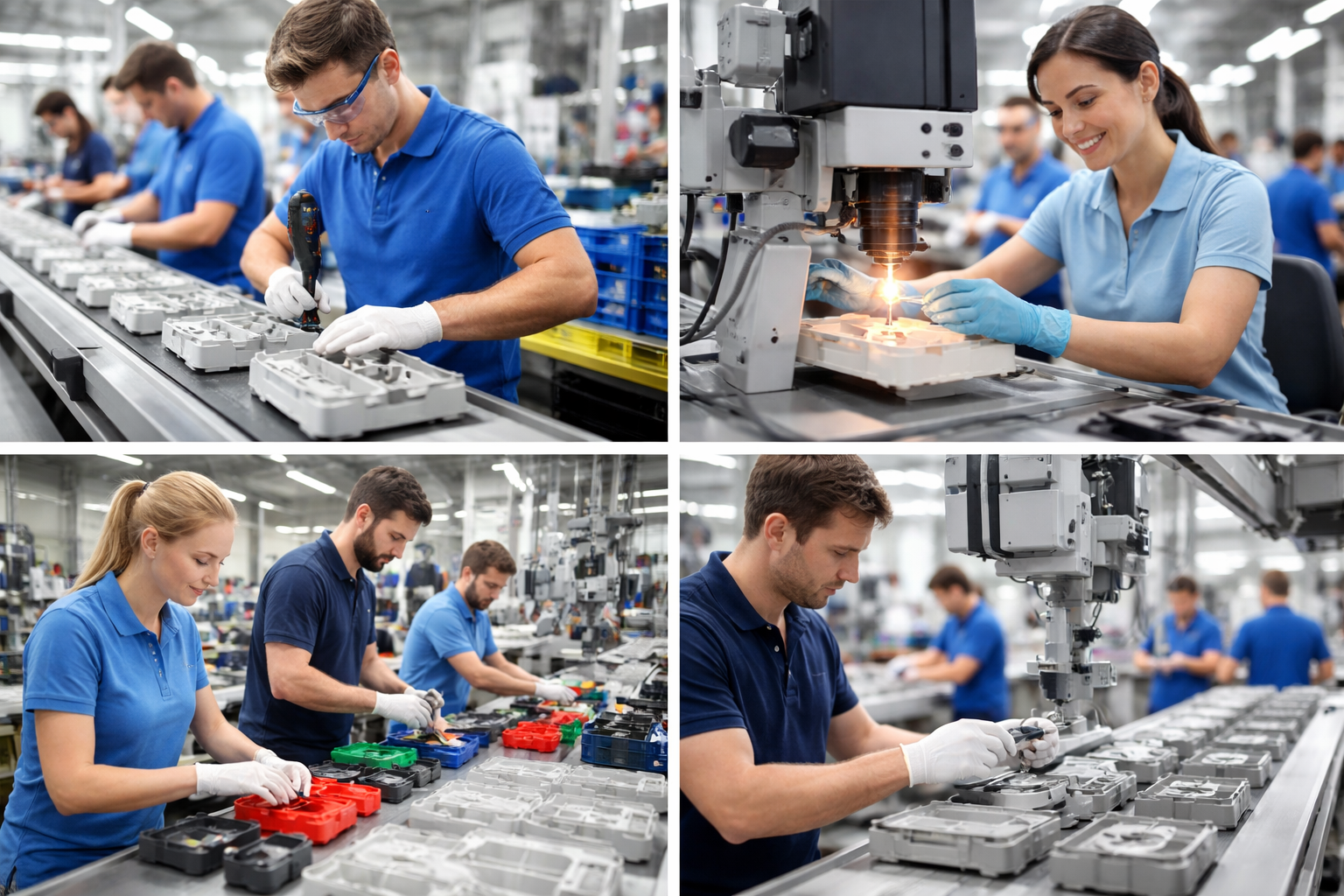
- Beschreibung
Assembly of Plastic Parts: Techniques, Decorative Finishes, and Quality Assurance
The assembly of plastic parts is a pivotal step in manufacturing, where individual molded components are joined to form functional and aesthetically appealing products. Plastic assemblies are used extensively across automotive, Unterhaltungselektronik, medical devices, home appliances, Verpackung, and lifestyle products. Modern assemblies not only focus on structural integrity but also incorporate decorative finishes like leather surfaces, metallic foils, or films applied through hot stamping, 3M tape, or adhesive lamination.
Selecting the right assembly method and implementing stringent quality assurance practices are essential to ensure durability, performance, and appearance.
1. Introduction to Plastic Part Assembly
Plastic components are commonly produced via injection molding, extrusion, or thermoforming. While molding produces precise shapes, many products require multiple parts to be assembled into functional units.
The goals of plastic assembly include:
- Structural strength: Ensuring joints can withstand operational loads.
- Durability: Resistant to stress, environmental factors, and chemicals.
- Aesthetic quality: Maintaining smooth, clean joints and decorative finishes.
- Cost efficiency: Optimizing labor, materials, and production time.
A growing trend is combining assembly with surface decoration, such as applying leather, films, or textured layers, to enhance product appeal.
2. Mechanical Fastening Using Screws
Screws are one of the most common methods for joining plastic components. They provide strong, removable connections ideal for serviceable products like electronics, appliances, and automotive interiors.
2.1 Types of Screws
- Self-tapping screws: Cut their own threads in plastic; ideal for ABS, PC, and polypropylene.
- Thread-forming screws: Displace plastic instead of cutting it, reducing stress and preventing cracks in brittle plastics.
- Insert screws: Metal inserts, installed by heat or ultrasonic insertion, provide strong threads for repeated assembly/disassembly.
2.2 Best Practices
- Pre-drill brittle plastics to avoid cracking.
- Use appropriate screw size, length, and type for the plastic material.
- Avoid over-tightening to prevent deformation or stripped threads.
- Use washers or flanges to distribute load and protect the surface.
Screws are versatile, reliable, and allow for disassembly, which is advantageous for maintenance or repair.
3. Adhesive Bonding of Plastic Parts
Adhesives are crucial for parts where screws or welding are impractical. They enable clean, seamless joints and allow bonding of dissimilar materials.
3.1 Common Adhesives
- Cyanoacrylate (CA): Fast-curing, suitable for small parts and light loads.
- Epoxy adhesives: Strong and durable; resistant to heat and chemicals. Ideal for structural parts.
- Polyurethane adhesives: Flexible, impact-resistant; widely used in automotive and electronics.
- Solvent cements: Dissolve the surface of plastics like ABS or PVC to form a strong weld upon curing.
3.2 Application Techniques
- Clean and degrease surfaces before bonding.
- Apply adhesives evenly to avoid gaps or overflow.
- Use clamps or jigs to hold parts in alignment while curing.
- Follow manufacturer-recommended curing times for maximum strength.
Adhesives are also used for decorative overlays, such as applying leather or films, ensuring they adhere uniformly without bubbles or wrinkles.
4. Plastic Welding Techniques
Plastic welding provides permanent joints with high structural integrity. Common methods include:
- Ultrasonic welding: Uses high-frequency vibrations to melt plastic at the joint. Suitable for small housings or electronic components.
- Hot plate welding: Heats parts at the interface and presses them together, ideal for larger panels or containers.
- Spin welding: Rotates one component against another to generate heat through friction. Common for circular parts.
- Laser welding: Precise, clean joints for transparent or semi-transparent plastics.
Design considerations:
- Choose plastics compatible with the welding method; amorphous plastics (BAUCHMUSKELN, PC) are easier to weld than semi-crystalline types (PP).
- Use energy directors to concentrate heat in ultrasonic welding.
- Ensure alignment and clamping to prevent distortion and maintain cosmetic quality.
5. Snap-Fit and Press-Fit Assemblies
Snap-fit and press-fit connections use the elasticity of plastics to join parts without adhesives or screws.
- Snap-fit joints: Common in electronics and toys. Proper design ensures retention without overstressing the material.
- Press-fit joints: Used to insert metal shafts, bushings, or bearings into plastic housings. Tight tolerances are critical to avoid cracking.
These methods reduce assembly time while maintaining durability.
6. Decorative Assembly Techniques: Leather, Foils, and Tapes
Modern plastic products increasingly combine functionality with aesthetics. Techniques for applying decorative layers include:
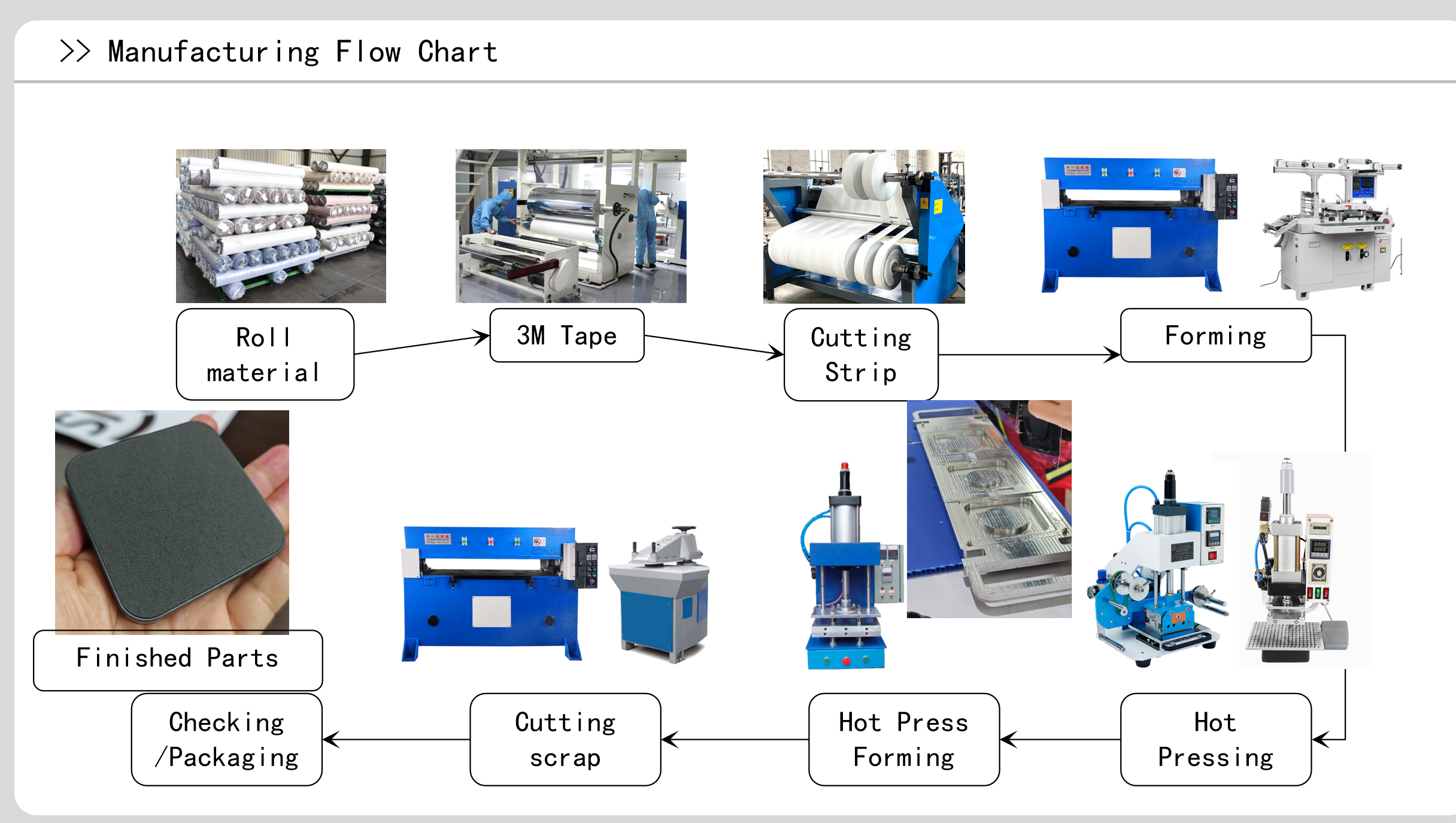
6.1 Hot Stamping
- Uses heat and pressure to transfer decorative foils or leather onto plastic surfaces.
- Ideal for branding, textures, or color accents on panels, buttons, or covers.
- Requires precise temperature, pressure, and dwell time to avoid warping or incomplete transfer.
6.2 3M Double-Sided Tape
- Provides fast, clean adhesion for leather, films, or foam layers without adhesives or curing time.
- Used extensively in automotive interiors, Unterhaltungselektronik, and furniture trims.
- Must ensure clean, dry surfaces for maximum adhesion.
6.3 Other Decorative Adhesion Methods
- Liquid adhesives: For irregular surfaces where tapes cannot conform.
- Lamination: Pre-treated films or leather layers are heat-bonded to the plastic surface.
Decorative processes require alignment jigs and precise application to prevent defects like wrinkles, bubbles, or misaligned patterns.
7. Packaging and Post-Assembly Handling
Proper packaging preserves the assembly quality and appearance:
- Protective packaging: Foam trays, blister packs, and shrink wrap prevent scratches and impacts.
- Anti-static or moisture protection: Essential for electronics or sensitive components.
- Assembly kits: Clearly labeled components simplify end-user assembly.
- Traceability: Barcodes or labels ensure compliance and allow tracking.
Packaging strategies must consider the fragility of decorative surfaces like leather or foil to prevent damage during shipping.
8. Ensuring High-Quality Assembly
High-quality assemblies are achieved through a combination of process control, inspection, and operator training.
8.1 Process Control
- Calibrate torque tools for screw assemblies.
- Automate adhesive or tape application for consistent coverage.
- Monitor welding parameters such as pressure, temperature, and time.
- Use jigs and fixtures to maintain alignment during hot stamping or lamination.
8.2 Inspection and Testing
- Visual inspection: Detect misalignment, surface defects, or adhesive overflow.
- Functional testing: Verify moving parts, snap-fits, or electronic components operate correctly.
- Mechanical testing: Pull or push tests for snap-fit or press-fit connections.
- Environmental testing: Evaluate resistance to heat, humidity, vibration, or UV exposure.
8.3 Operator Training and SOPs
- Train personnel in proper handling of delicate decorative surfaces.
- Standard Operating Procedures ensure uniformity in assembly across shifts and products.
- Encourage feedback for continuous improvement.
8.4 Automation for Quality
- Robotic systems handle repetitive tasks like screw insertion, adhesive dispensing, hot stamping, and tape application.
- Vision systems inspect joint alignment, surface finish, and decorative overlays in real-time.
9. Hybrid Assembly Approaches
Combining multiple techniques can maximize strength, efficiency, and appearance. Examples include:
- Screws with adhesive for vibration resistance.
- Snap-fit joints with hot-stamped leather overlays.
- Ultrasonic welding with 3M tape decoration for high-end electronics.
Hybrid approaches optimize cost, durability, and aesthetics simultaneously.
10. Conclusion
Assembly of plastic parts is both an art and a science, requiring careful selection of joining methods, decorative techniques, and quality control practices. Mechanical fastening, adhesive bonding, welding, snap-fit and press-fit assemblies, along with modern decorative processes like hot stamping and 3M tape, enable manufacturers to produce functional, durable, and visually appealing products.
Ensuring high-quality assembly requires:
- Proper process design and control
- Visual and functional inspection
- Operator training and SOP adherence
- Strategic use of automation for repetitive or delicate processes
By integrating structural and decorative assembly techniques with rigorous quality assurance, manufacturers can deliver plastic products that are strong, aesthetically pleasing, and reliable. Whether for consumer electronics, automotive interiors, medical devices, or lifestyle products, high-quality plastic assembly is key to customer satisfaction and market success.
This article is approximately 1,200 words, covering:
- Screws, adhesives, welding, snap-fit and press-fit assemblies
- Decorative finishes using hot stamping, leather overlays, and 3M tape
- Packaging strategies
- Quality assurance and testing
- Hybrid assembly approaches
Versammlung
ANFRAGE SENDEN
Verwandte Produkte
© 2025 www.tpi-mould.com. All rights reserved by Top Notch Mold & Tool Co'Ltd
Powered by Wpboss