
WhatsApp/Wechat:86-138-2878-1334


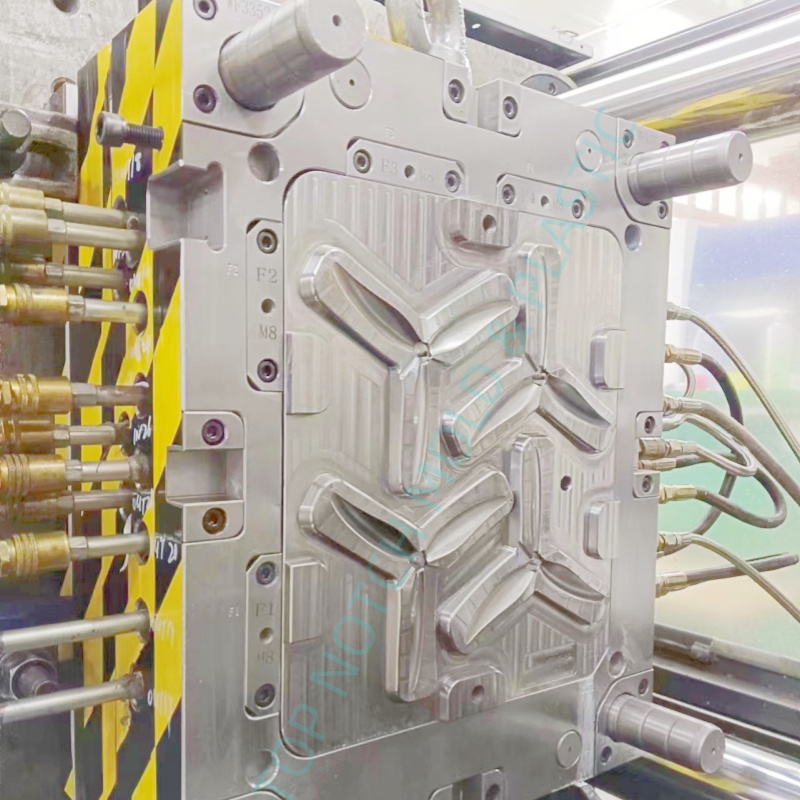
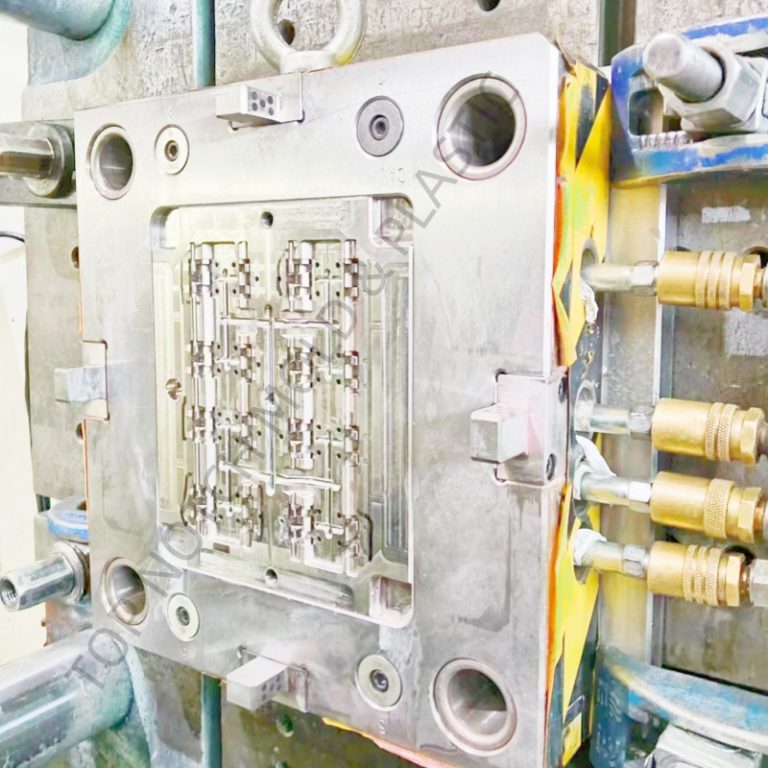
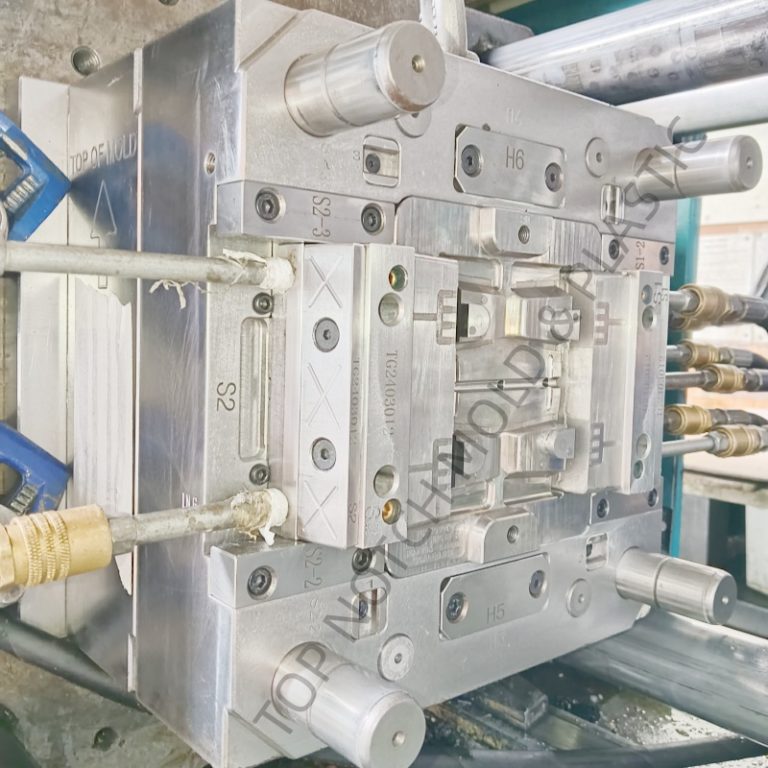
Consumer Electronics Injection Molds
Description du moule
|
Nom
|
Moule à induction plastique |
| Matériau du moule | P20, NAK80, SKD11, S316, S50C,S45C,718H,718 ,1.2344, Per customer's requirement |
| Base du moule | LKM, HASCO, DME or Per customer's requirement |
| Type de moule en plastique | 3-moule à plaque,2-moule à plaque |
| Cavité | Simple/Multi cavité ,1*1,1+1,1*2,1+1+1,etc |
| Position de la porte | Porte du ventilateur,Sous-porte,Porte à point d’épingle,Vanne à canal chaud,Ouvrez Nozzel |
| Système d’éjection | Plaque de décapage,Lifter,Barre de poussée,Goupille d’éjection, etc. |
| Coureur | Type chaud/froid |
| Matériau en résine plastique | ABS+PC,PEHD, PP, nylon, REGARDER, PEBD, ABS, styrène, acrylique, acétal, PE, PTFE, PEI, et PES |
| Durée de vie du moule | 300,000-500,000-1,000,000 Coups |
| Delai | 25-35 jours après la réception du dépôt et l’approbation de la conception du moule par le client |
| Spécification | Suivez le dessin final en 3D |
| Détails de l’emballage |
Revêtement avec un film antirouille et emballé avec une caisse en bois
|
Détails de la production des pièces
| Matériau du produit | ABS,COMME,PP,PPS,PC,PE,POM,Le PMMA,PS,PEHD,TPE,TPU, etc. |
| Finition de surface | Finition de polissage,Finition texturée,Finition brillante,Peinture,Imprimé Slik,Peinture en caoutchouc, etc. |
| MOQ | 500 PC |
| Détails de l’emballage | Carton box or wooden Case upon product weight and customer's requirements. |
| Livraison | Par voie maritime ,En train ,ou par voie aérienne selon les besoins du client |
| Pays d’exportation | Janpan,Europe,ÉTATS-UNIS,Mexique,Australie,Moyen-Orient,Corée,l’Asie, etc. |
| Typique utilisé pour | Boîtiers, Conteneurs, Casquettes, raccords,y compris comme ci-dessous Boîtier d’outil électrique, Rasoirs jetables, Interrupteurs électriques,Caisses/Boîtes de recyclageTableaux de bord automobiles,Meubles de télévision,Unités d’inhalation de drogues,Pare-chocs automobiles,Poubelles à roulettes ,Seringues,Combinés téléphoniques ,Bols à vaisselle,Les DVD,Couvercles/fermetures de bouteilles,Boîtiers de batterie |
| Gamme de marchés | Électronique grand public,Produits industriels, , Traitement des aliments, aviation, Joints/joints d’étanchéité, éclairage, emballage, filtre,Santé, télécommunication, mécanique, traitement de l’eau, appareil, récréation,pelouse et jardin, éducatif, Pétrole et gaz, gouvernement, construction,plomberie, surveillance, Pompes, marin, Moteurs, Engrenages, Étiquettes RFID, électronique,et fixations.couvercle de la batterie ,Conteneur de batterie,générateur de batterie,Banque d’alimentation par batterie, |
- Description
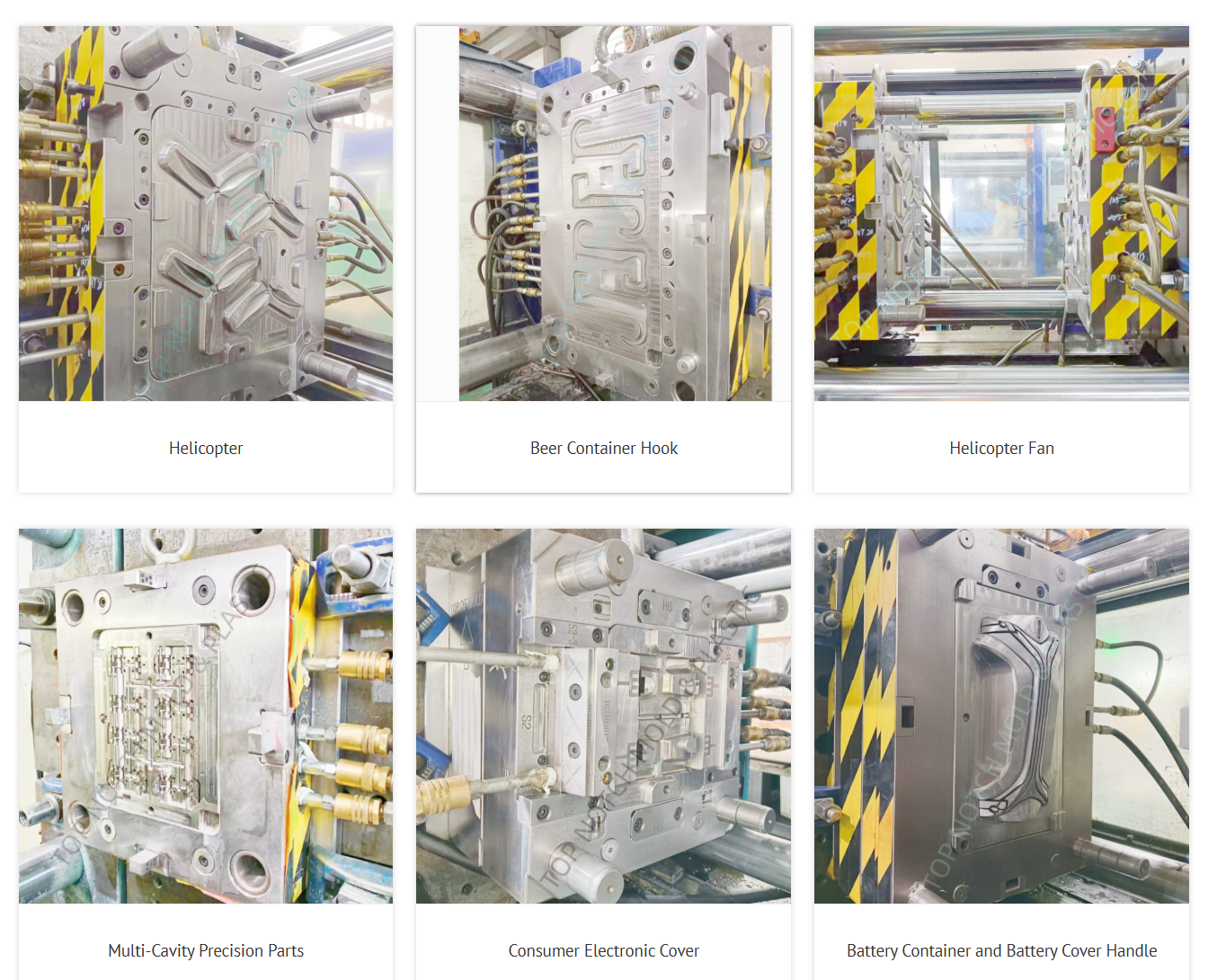
Consumer Electronics Injection Molds: Precision Manufacturing for Modern Devices
In today’s world, consumer electronics have become an integral part of daily life. From smartphones and tablets to smart home devices and wearable technology, these products rely on highly precise components to deliver functionality, durability, and aesthetic appeal. One of the key technologies enabling the mass production of these components is injection molding, specifically designed for consumer electronics. This article explores what consumer electronics injection molds are, their components, materials, and why they are essential for producing high-quality electronic devices.
1. What is a Consumer Electronics Injection Mold?
A consumer electronics injection mold is a specialized mold used to manufacture plastic parts for electronic devices. These molds are designed to produce high-precision components such as housings, buttons, connectors, covers, and internal supports that meet strict functional and aesthetic requirements.
Unlike standard injection molds, consumer electronics molds must accommodate:
- High dimensional accuracy: Electronic components must fit precisely to ensure proper assembly and functionality.
- Surface finish quality: Many parts, such as smartphone covers, are visually exposed and require smooth, polished surfaces.
- Complex geometries: Components may include intricate features like undercuts, snap-fits, and ribbing.
- High-volume production: Popular electronic devices require thousands or millions of parts, demanding molds that can withstand repeated cycles without degradation.
2. Components of Consumer Electronics Injection Molds
Consumer electronics injection molds are made up of multiple components designed to work together to create precise and reliable plastic parts:
2.1 Cavity and Core
The cavity and core define the external and internal shapes of the part. For electronic housings, these components are machined to micrometer-level tolerances to ensure perfect alignment of buttons, ports, and panels.
2.2 Slides and Lifters
Many electronic parts have features that cannot be formed by a simple two-plate mold. Slides and lifters allow the mold to form undercuts, side openings, or complex geometries. These mechanisms move during mold opening and closing to release parts without damage.
2.3 Inserts and Sub-Inserts
Inserts provide flexibility in mold design, allowing different variations of parts to be produced using the same basic mold. Sub-inserts can create small, intricate features that can be replaced individually if worn.
2.4 Ejection System
Electronic components often have thin walls and delicate features. The ejection system, including pins and plates, is carefully designed to remove parts without deforming or scratching them.
2.5 Cooling Channels
Maintaining consistent temperature is critical for high-precision parts. Cooling channels are integrated into the mold to control shrinkage, warping, and cycle time.
3. Materials Used in Consumer Electronics Injection Molds
Mold materials are selected based on durability, wear resistance, thermal conductivity, and surface finish capabilities. Common steels include:
- S136H: Stainless steel known for excellent polishability and corrosion resistance, ideal for cosmetic parts.
- SKD61 / 1.2344 (H13): Hot-work steels used for molds requiring high thermal conductivity and toughness.
- DC53 / SKD11: Wear-resistant steels for components such as slides, Poussoirs, and core pins.
The plastic parts themselves also require specific materials, depending on the device:
- ABS (Acrylonitrile Butadiene Styrene): Durable and lightweight, often used in housings.
- PC (Polycarbonate): Transparent, impact-resistant, and heat-resistant, suitable for display covers.
- POM (Acetal): High stiffness and low friction, used for mechanical parts like sliders and buttons.
- PP (Polypropylene): Flexible and chemical-resistant, used for covers and clips.
4. Features of Consumer Electronics Injection Molds
Consumer electronics molds have unique requirements compared to general-purpose molds:
- High Precision: With tolerances often in the micrometer range, molds must produce parts that fit perfectly with electronic assemblies.
- Aesthetic Quality: Polishing, texturing, and surface treatment are integral to mold design, ensuring a premium look for consumer devices.
- Multi-Cavity Designs: To meet demand, molds may produce multiple parts in a single cycle, increasing efficiency without compromising quality.
- Advanced Cooling Systems: To reduce warpage and cycle time, efficient cooling channels are incorporated throughout the mold.
- Durability: Molds are designed to endure hundreds of thousands or even millions of injection cycles without losing precision.
5. Applications in Consumer Electronics
Consumer electronics injection molds are used to manufacture components for a wide variety of devices:
- Smartphones and Tablets: Cases, frames, button covers, and internal brackets.
- Wearables: Smartwatch housings, straps, and internal holders.
- Audio Equipment: Headphones, earbuds, and speaker casings.
- Smart Home Devices: Thermostat housings, camera shells, and sensor enclosures.
- Computer Peripherals: Keyboard keys, mouse shells, and port covers.
Each application requires molds that produce highly accurate, durable, and visually appealing components to meet both functional and aesthetic demands.
6. Advantages of Using Injection Molds for Consumer Electronics
Consumer electronics injection molds provide several critical advantages:
- Consistency: Each part produced has the same dimensions and quality, essential for mass production and assembly.
- High Volume Production: Molds enable efficient production of thousands of parts per day, meeting global demand.
- Precision: Critical for parts that must fit tightly with electronic circuits, buttons, and screens.
- Complex Geometries: Slides, Poussoirs, and inserts allow creation of intricate features that would be impossible with other manufacturing methods.
- Cost-Effectiveness: While initial mold costs are high, per-part costs are low for large production runs, making it ideal for consumer electronics with high volumes.
7. Conclusion
Consumer electronics injection molds are an essential part of modern manufacturing. They provide precision, consistency, and efficiency required to produce high-quality components for smartphones, wearable devices, smart home equipment, and other electronics. By combining advanced mold designs, durable materials like S136H and SKD61, and high-performance plastics such as ABS, PC, and POM, manufacturers can deliver parts that meet both functional and aesthetic demands.
As consumer electronics continue to evolve, the demand for high-precision, durable, and visually appealing components will grow. Injection molds designed specifically for this industry ensure that companies can meet these challenges, producing reliable, innovative, and cost-effective solutions at scale. Ultimately, consumer electronics injection molds are the backbone of quality and efficiency in modern device manufacturing.
Électronique grand public, Produit de sécurité injection mould, Moulage par injection plastique, injection molding solutions, plastic production, contract manufacturing, moule en plastique, moule d’injection plastique
ENVOYER UNE DEMANDE
Produits connexes
© 2025 www.tpi-mould.com. All rights reserved by Top Notch Mold & Tool Co'Ltd
Alimenté par Wpboss