
WhatsApp/Wechat:86-138-2878-1334


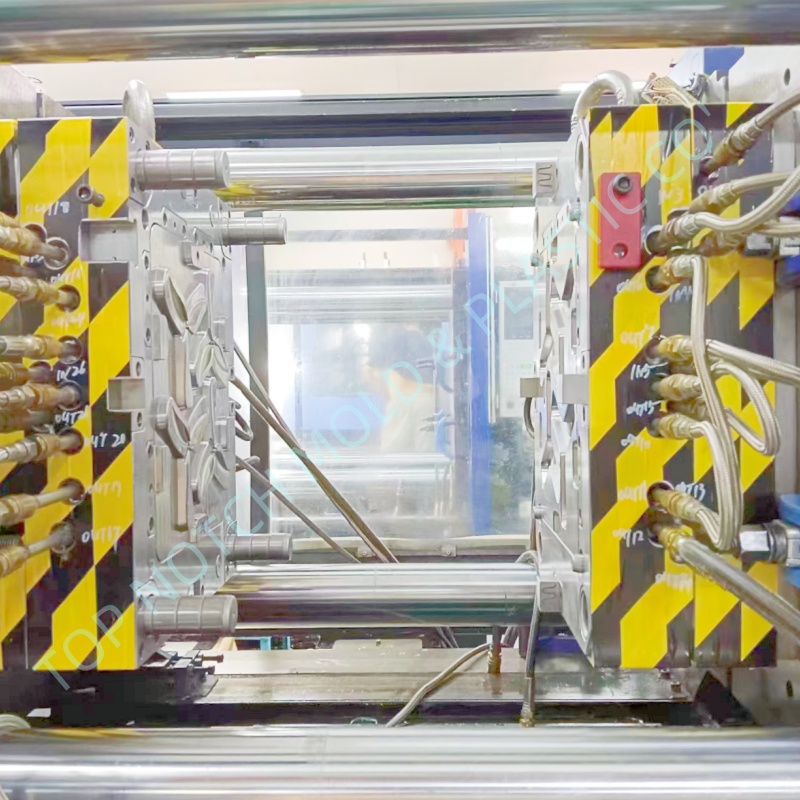
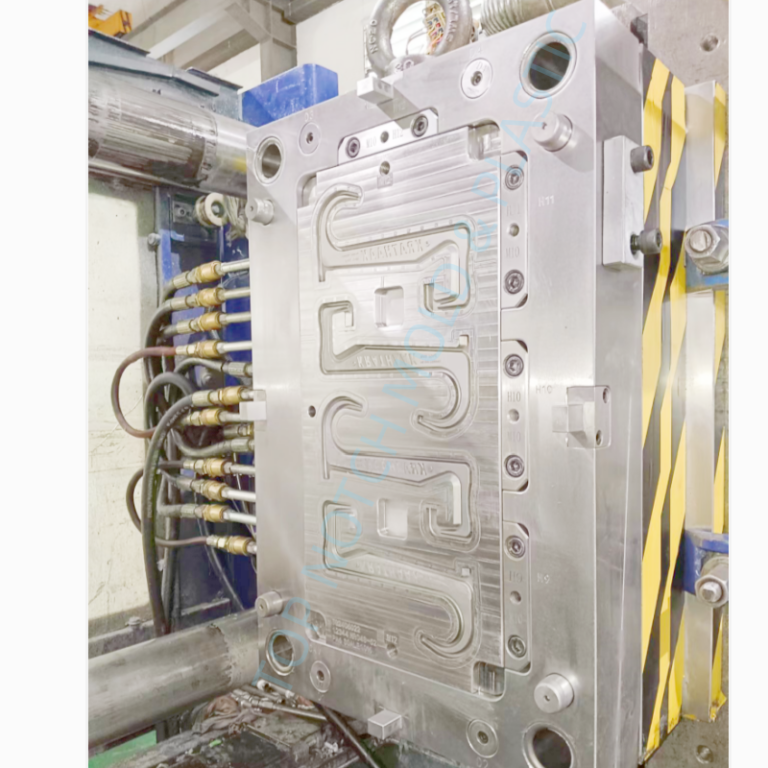
Plastic Injection Mold for Drone Products
Description du moule
|
Nom
|
Moule à induction plastique |
| Matériau du moule | P20, NAK80, SKD11, S316, S50C,S45C,718H,718 ,1.2344, Per customer's requirement |
| Base du moule | LKM, HASCO, DME or Per customer's requirement |
| Type de moule en plastique | 3-moule à plaque,2-moule à plaque |
| Cavité | Simple/Multi cavité ,1*1,1+1,1*2,1+1+1,etc |
| Position de la porte | Porte du ventilateur,Sous-porte,Porte à point d’épingle,Vanne à canal chaud,Ouvrez Nozzel |
| Système d’éjection | Plaque de décapage,Lifter,Barre de poussée,Goupille d’éjection, etc. |
| Coureur | Type chaud/froid |
| Matériau en résine plastique | ABS+PC,PEHD, PP, nylon, REGARDER, PEBD, ABS, styrène, acrylique, acétal, PE, PTFE, PEI, et PES |
| Durée de vie du moule | 300,000-500,000-1,000,000 Coups |
| Delai | 25-35 jours après la réception du dépôt et l’approbation de la conception du moule par le client |
| Spécification | Suivez le dessin final en 3D |
| Détails de l’emballage |
Revêtement avec un film antirouille et emballé avec une caisse en bois
|
Détails de la production des pièces
| Matériau du produit | ABS,COMME,PP,PPS,PC,PE,POM,Le PMMA,PS,PEHD,TPE,TPU, etc. |
| Finition de surface | Finition de polissage,Finition texturée,Finition brillante,Peinture,Imprimé Slik,Peinture en caoutchouc, etc. |
| MOQ | 500 PC |
| Détails de l’emballage | Carton box or wooden Case upon product weight and customer's requirements. |
| Livraison | Par voie maritime ,En train ,ou par voie aérienne selon les besoins du client |
| Pays d’exportation | Janpan,Europe,ÉTATS-UNIS,Mexique,Australie,Moyen-Orient,Corée,l’Asie, etc. |
| Typique utilisé pour | Boîtiers, Conteneurs, Casquettes, raccords,y compris comme ci-dessous Boîtier d’outil électrique, Rasoirs jetables, Interrupteurs électriques,Caisses/Boîtes de recyclageTableaux de bord automobiles,Meubles de télévision,Unités d’inhalation de drogues,Pare-chocs automobiles,Poubelles à roulettes ,Seringues,Combinés téléphoniques ,Bols à vaisselle,Les DVD,Couvercles/fermetures de bouteilles,Boîtiers de batterie |
| Gamme de marchés | Électronique grand public,Produits industriels, , Traitement des aliments, aviation, Joints/joints d’étanchéité, éclairage, emballage, filtre,Santé, télécommunication, mécanique, traitement de l’eau, appareil, récréation,pelouse et jardin, éducatif, Pétrole et gaz, gouvernement, construction,plomberie, surveillance, Pompes, marin, Moteurs, Engrenages, Étiquettes RFID, électronique,et fixations. |
- Description
Plastic Injection Mold for Drone Products: Design, Materials, and Manufacturing
The rapid growth of the drone industry has increased demand for high-precision, lightweight, and durable components. Plastic injection mold for drone products plays a critical role in producing essential parts, including housings, propeller guards, landing gears, motor mounts, and camera enclosures. Injection molding allows manufacturers to create complex geometries with consistent quality, high strength, and aesthetic appeal, ensuring that drones perform reliably in both consumer and industrial applications.
This article introduces plastic injection mold for drone products, covering design principles, material selection, injection molding process, finishing techniques, assembly, and quality assurance.
1. Introduction to Drone Injection Molding
Drones require lightweight yet durable components to ensure optimal flight performance and structural integrity. Plastic injection mold for drone products enables the production of large quantities of consistent parts with precise tolerances, essential for balance, aerodynamics, and electronics housing.
The primary goals of plastic injection molding for drone parts include:
- Dimensional accuracy: Critical for propeller alignment, motor fitting, and body assembly.
- Strength and durability: Parts must withstand impacts, vibrations, and environmental stress.
- Lightweight design: Minimizing weight improves flight time and stability.
- Aesthetic and functional surfaces: Smooth finishes, textures, and custom designs for branding and aerodynamics.
Injection molding is ideal for producing intricate components such as drone shells, propeller guards, and landing gear supports with integrated features.
2. Mold Design for Drone Components
Designing molds for drone parts is complex due to aerodynamic requirements, thin walls, and functional features.
2.1 Core Mold Elements
- Cavities and cores: Precisely machined to form complex drone geometries, such as fuselages, propeller mounts, and battery housings.
- Gate and runner systems: Optimized for uniform plastic flow to prevent voids, sink marks, or incomplete filling.
- Système d’éjection: Carefully placed ejector pins or plates prevent damage to thin-walled or delicate features.
- Cooling channels: Ensure uniform cooling to maintain dimensional accuracy and minimize warpage.
2.2 Design Considerations
- Wall thickness: Uniform thickness ensures strength without adding unnecessary weight.
- Ribs and reinforcement structures: Provide strength while maintaining low weight.
- Draft angles: Facilitate smooth ejection without damaging features.
- Aesthetic and aerodynamic features: Molded textures, smooth curves, and integrated mounting points.
A well-designed mold ensures functional, durable, and visually appealing drone components.
3. Material Selection for Drone Injection Mold Parts
Material selection is critical in plastic injection mold for drone products to balance weight, strength, and environmental resistance.
3.1 Common Materials
- ABS (Acrylonitrile Butadiene Styrene): Durable and impact-resistant, suitable for drone shells and propeller guards.
- Polycarbonate (PC): High strength and transparency for protective camera covers or sensor housings.
- Nylon (PA): Excellent toughness, used for motor mounts, Engrenages, and structural components.
- PP (Polypropylene): Lightweight and chemically resistant, ideal for non-critical housing components.
3.2 Material Considerations
- Materials must withstand vibration, UV exposure, and temperature variations.
- Lightweight materials improve drone flight performance and efficiency.
- Flame-retardant or reinforced plastics may be used in industrial drone applications.
4. Injection Molding Process for Drone Parts
The injection molding process for drone components is highly controlled to produce precision parts with consistent quality.
4.1 Plastic Melting and Injection
Plastic granules are heated and injected into the mold under precise pressure and speed. Optimized injection parameters ensure complete filling of thin-walled parts without voids or defects.
4.2 Cooling and Solidification
Uniform cooling ensures dimensional stability, particularly important for parts with long spans, thin walls, or complex reinforcement ribs. Cooling channel design and cycle timing are critical.
4.3 Part Ejection
After solidification, parts are ejected using pins or plates. Careful ejection prevents warping, scratches, or damage to delicate features such as propeller mounts or sensor openings.
4.4 Moules multi-cavités
High-volume production may use multi-cavity molds to produce multiple drone components simultaneously, increasing efficiency and reducing per-unit cost.
5. Surface Finishing and Decorative Features
Many drone components require aesthetic or functional surface finishes to enhance performance or brand identity.
- Texturing: Provides better grip on remote control handles or landing gear pads.
- Surmoulage: Soft-touch or protective layers can be added to impact-prone areas.
- Painting or coating: Metallic or matte finishes for premium drones.
- Laser engraving or pad printing: Logos, markings, or alignment indicators.
Surface finishing not only improves appearance but also enhances durability and ergonomics.
6. Assembly of Injection Molded Drone Components
Injection-molded parts are assembled with electronics, Moteurs, propellers, and other components.
6.1 Mechanical Assembly
- Snap-fits, screws, or clips integrate motor mounts, battery housings, and propeller guards.
- Precision alignment ensures proper balance and aerodynamic performance.
6.2 Electronic Integration
- Molds are designed to accommodate wiring channels, PCB housings, and battery compartments.
- Protective housings are molded to prevent vibrations or damage to electronics.
6.3 Secondary Finishing
- Adhesive bonding or ultrasonic welding secures multiple parts.
- Decorative overlays or soft-touch pads are applied to improve handling.
7. Quality Assurance in Drone Injection Molded Parts
Quality control is critical for drones, as component failure can impact flight performance and safety.
7.1 Dimensional and Visual Inspection
- Verify that motor mounts, propeller shafts, and housing dimensions meet strict tolerances.
- Check for surface defects such as warping, sink marks, or flash.
7.2 Functional Testing
- Confirm proper assembly of moving parts, such as retractable landing gear or foldable arms.
- Ensure fitment with electronic modules, sensors, and propellers.
7.3 Process Monitoring
- Monitor injection temperature, pressure, and cooling cycles.
- Statistical process control (SPC) ensures consistent quality in high-volume production.
8. Applications of Plastic Injection Mold for Drone Products
Plastic injection molded parts for drones are used across multiple drone types:
- Consumer drones: Lightweight fuselages, propeller guards, landing gear, and controller housings.
- Industrial drones: Reinforced motor mounts, protective enclosures, and sensor housings.
- Camera drones: Transparent or tinted polycarbonate camera housings, gimbal covers, and aerodynamic shells.
- Specialized drones: Delivery drones, inspection drones, or agricultural drones with customized molded components.
Injection molding allows the production of precision, durable, and lightweight parts for both consumer and professional drones.
9. Advantages of Plastic Injection Mold in Drone Manufacturing
- High precision: Ensures proper alignment of propellers, Moteurs, and electronics.
- High-volume production: Multi-cavity molds improve efficiency and reduce per-unit cost.
- Material versatility: Supports rigid and flexible plastics for structural and soft-touch components.
- Durability: Molded parts withstand vibration, impact, and environmental conditions.
- Design flexibility: Complex geometries, integrated features, and surface textures can be molded directly.
10. Conclusion
Plastic injection mold for drone products is a critical technology for producing high-quality, lightweight, and precise components required in modern drones. From mold design and material selection to injection molding, surface finishing, and assembly, each step ensures drone parts meet functional, aesthetic, and safety standards.
By leveraging advanced mold design, multi-cavity production, over-molding, and precise quality control, manufacturers can produce drone fuselages, motor mounts, landing gears, propeller guards, and electronic housings that are durable, lightweight, and visually appealing. Injection molding remains an essential process in creating efficient, reliable, and high-performance drones for both consumer and industrial applications.
Moule d’injection, Électronique grand public, Produit de sécurité Moulage par injection plastique, Moule d’injection d’écouteurs tour de cou, tour de cou écouteurs moule en plastique, Écouteurs tour de cou, moules de casque Bluetooth pour le cou, moule en plastique, moule d’injection plastique
ENVOYER UNE DEMANDE
Produits connexes
© 2025 www.tpi-mould.com. All rights reserved by Top Notch Mold & Tool Co'Ltd
Alimenté par Wpboss