
WhatsApp/Wechat:86-138-2878-1334


Second Operation Manufacturing Process of Plastic Parts
Second Operation Manufacturing Process of Plastic Parts with Decorative Finishes: Hot Stamping, 3M Tape, and Quality Assurance
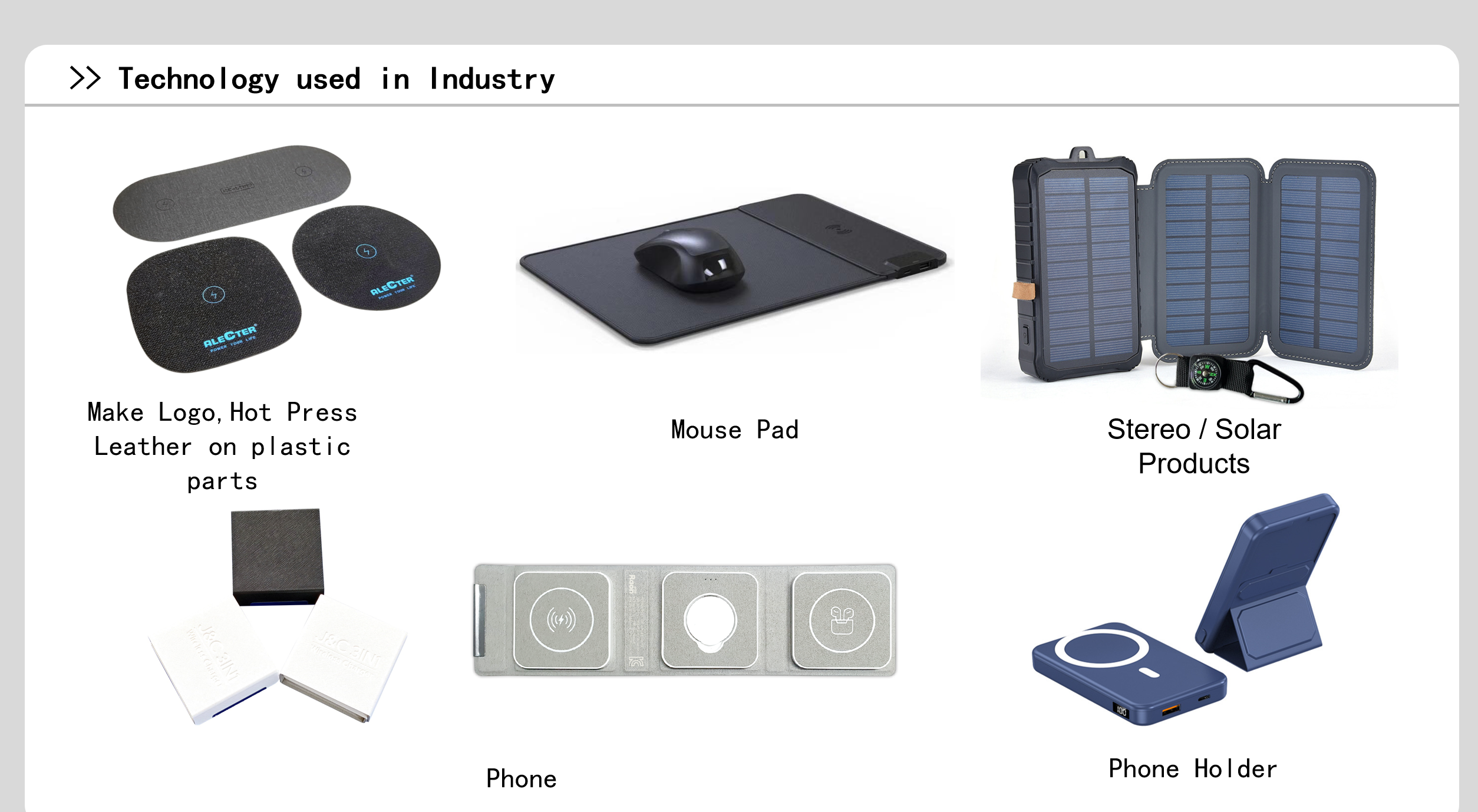
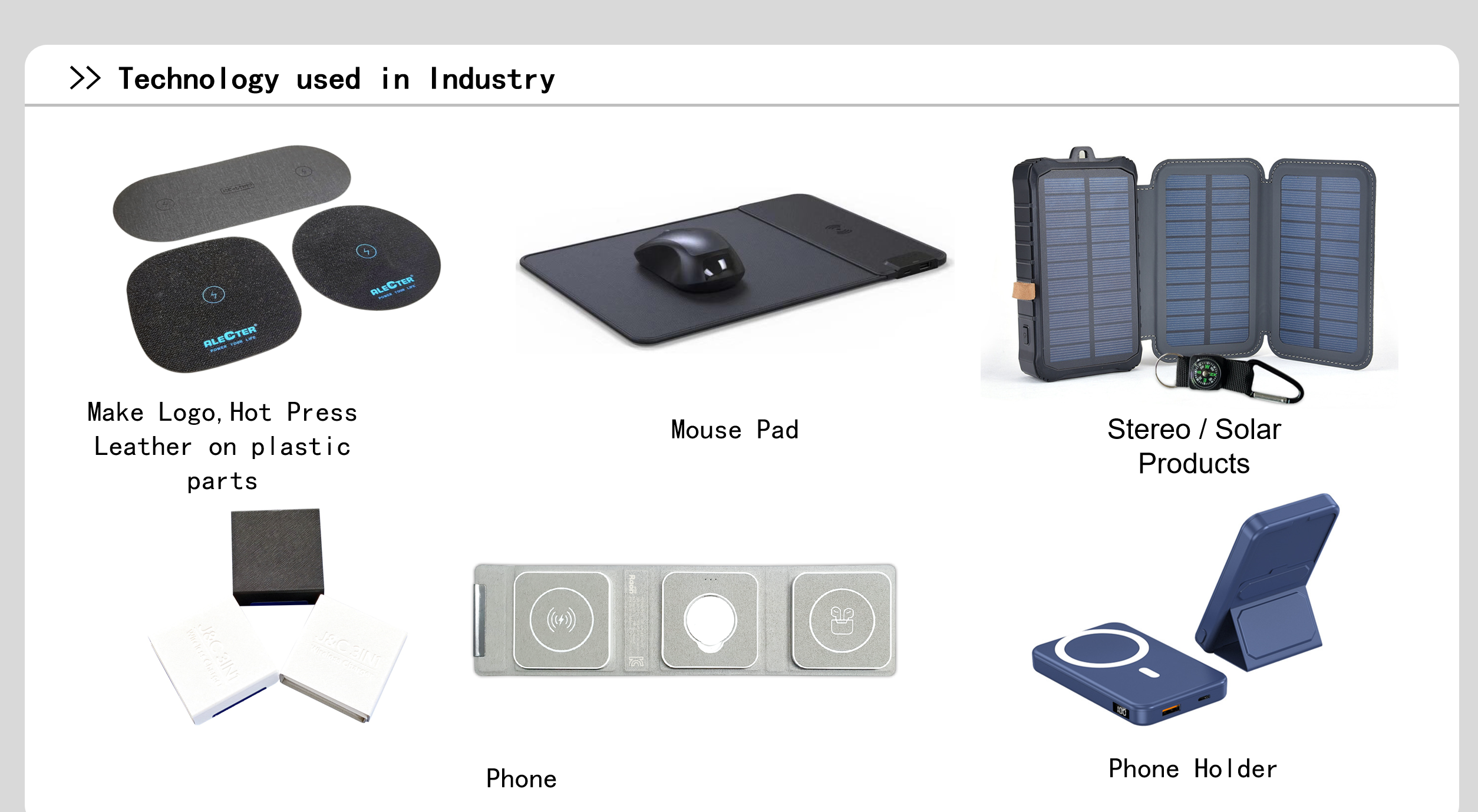
The modern manufacturing of plastic parts combines precise engineering, decorative finishing, and careful quality control to produce high-quality functional and aesthetically appealing products. From electronics to lifestyle accessories, products like mouse pads, phone holders, solar chargers, and stereo devices often involve plastic substrates enhanced with leather, foil, or other overlays. The manufacturing process includes multiple steps, starting from raw material preparation to final inspection and packaging.
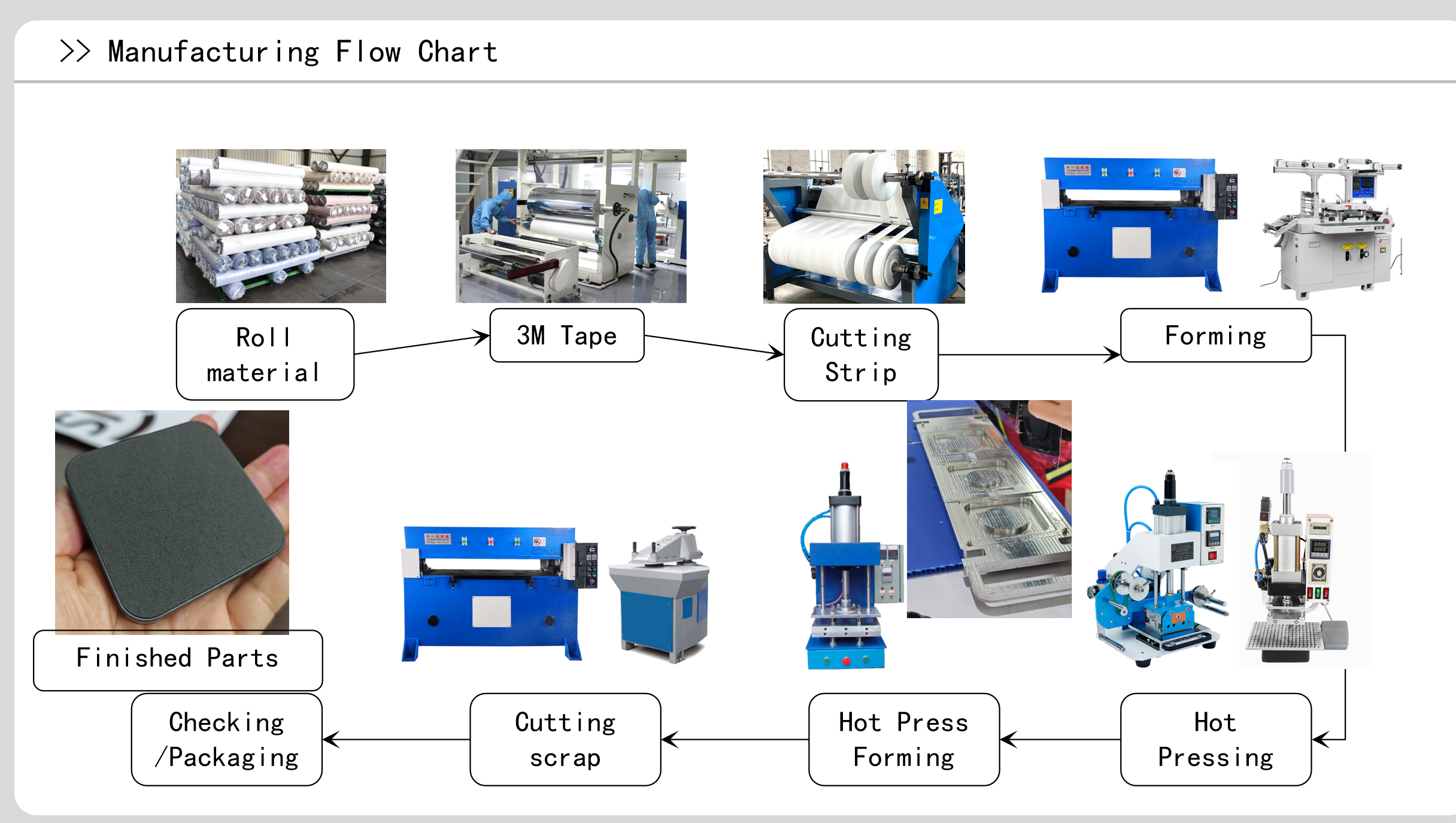
This article explains the detailed manufacturing process, illustrated by the flow chart and product examples from the images, and highlights techniques like 3M tape application, hot pressing of leather, cutting, forming, and quality assurance to ensure the assembly of plastic parts is consistent and durable.
1. Raw Material Preparation
The process begins with raw materials in roll form, such as plastic films, leather sheets, or decorative foils. Rolls are inspected for consistency in thickness, surface texture, and color. Quality raw materials ensure uniformity in all subsequent steps. Materials must also be compatible with adhesives, heat, and forming processes used later.
Key Points:
- Ensure material is free of defects such as scratches or bubbles.
- Verify compatibility with 3M tape, adhesives, and hot stamping processes.
- Store materials in a controlled environment to prevent moisture absorption or contamination.
This initial stage is critical, as poor-quality raw materials can compromise the strength and appearance of finished parts.
2. 3M Tape Application
Once raw materials are prepared, 3M double-sided tape can be applied to the plastic substrate or decorative layer. This adhesive step ensures that overlays such as leather or foam adhere firmly to plastic parts without requiring liquid adhesives.
Process Details:
- Roll the 3M tape onto the plastic surface using automated or semi-automated systems.
- Maintain consistent tension to avoid wrinkles, bubbles, or misalignment.
- Ensure precise placement according to design specifications.
3M tape offers a fast, clean, and reliable way to bond decorative layers to plastic parts while maintaining consistent quality.
3. Cutting Strips
After applying 3M tape or preparing the decorative layer, the material is cut into strips or sheets matching the desired part dimensions. Cutting is done using precision machinery to achieve consistent sizes and edges.
Cutting Techniques:
- Rotary or shear cutting machines for flexible materials like leather or film.
- Die cutting for rigid plastic strips.
- Laser cutting for intricate designs or logos.
This step ensures accurate dimensions for forming, hot pressing, or assembly, reducing waste and increasing production efficiency.
4. Forming Plastic Parts
Forming shapes the plastic substrate into the required product geometry. Depending on the application, forming methods include thermoforming, compression molding, or vacuum forming.
Forming Techniques:
- Thermoforming: Heating plastic sheets until pliable and pressing them into molds. Ideal for trays, holders, or electronic housings.
- Compression molding: High-pressure forming for rigid plastic parts.
- Vacuum forming: Suction forms plastic over molds for lightweight or flexible parts.
Proper forming ensures the plastic maintains dimensional accuracy, which is critical for assembly, decorative overlay alignment, and final product functionality.
5. Hot Pressing Decorative Layers
After forming, decorative layers such as leather or foil can be applied to the plastic surface through hot pressing or hot stamping.
Hot Pressing Process:
- Align the leather or decorative layer over the plastic part.
- Apply heat and pressure using a hot press machine to bond the overlay permanently.
- Heat temperature, pressing pressure, and dwell time are calibrated based on material properties to avoid warping or damaging the plastic.
This method is widely used for mouse pads, phone holders, and branded logos on plastic parts, providing a premium feel and durable finish.
6. Additional Hot Pressing for Logos
For parts requiring embossed or printed logos, a second hot press may be used to imprint the logo on the leather or film overlay.
Key Considerations:
- Ensure precise alignment to maintain visual quality.
- Control temperature to prevent leather scorching or plastic deformation.
- Use dies designed for consistent pressure and sharp logo details.
Logos and branding are essential in consumer electronics and lifestyle products, and hot stamping ensures they are durable and visually appealing.
7. Cutting Scrap and Trimming
After hot pressing, excess material or scrap is removed to achieve clean edges and finished shapes. Precision cutting machines trim overhanging decorative layers, ensuring each part meets design specifications.
Techniques:
- Die trimming for precise edges.
- Automated scrap removal to reduce labor and waste.
- Inspection of trimmed edges to ensure uniformity.
Trimming guarantees that finished parts look professional and fit correctly in assemblies or packaging.
8. Final Assembly and Hot Press Forming
Some products, especially those with multiple layers or functional features like mouse pads with integrated wireless charging, may require additional hot press forming. This step bonds multiple layers together, embeds 3M tape securely, or shapes flexible parts to final specifications.
Benefits:
- Ensures consistent layer adhesion.
- Maintains uniform thickness and surface texture.
- Enhances structural integrity for long-lasting durability.
At this stage, attention to temperature, pressure, and timing ensures the assembly of plastic parts is robust and ready for finishing.
9. Inspection and Quality Control
Quality assurance is a critical part of the manufacturing process. Every batch of assembled plastic parts undergoes inspection for structural integrity, visual quality, and dimensional accuracy.
Inspection Methods:
- Visual inspection: Detects misalignment, surface defects, or uneven pressing.
- Functional testing: Ensures features like wireless charging, folding mechanisms, or mouse pad friction meet specifications.
- Adhesion testing: Confirms leather or decorative layers are securely bonded.
- Dimensional measurement: Verifies conformity to design tolerances.
Implementing in-line inspection systems or sampling at multiple stages reduces defective products and ensures high-quality output.
10. Packaging of Finished Parts
After inspection, products are packaged to protect them during transport and storage. Packaging must account for both plastic structural parts and delicate decorative layers.
Packaging Considerations:
- Protective foam or trays to prevent scratches or deformation.
- Anti-static bags for electronic components.
- Organized labeling and grouping for kits or sets.
- Sealed boxes to maintain product aesthetics for consumer delivery.
Proper packaging safeguards the assembly of plastic parts, preserving quality until products reach customers.
11. Applications of This Manufacturing Process
The manufacturing process depicted in the flow charts applies to a wide range of real-world products:
- Mouse Pads: Multi-layered pads with plastic substrates and leather surfaces bonded via hot pressing or 3M tape.
- Phone Holders: Plastic bases with decorative overlays, ensuring both functionality and premium appearance.
- Stereo / Solar Products: Plastic cases with precision-formed shapes and hot-pressed or taped decorative layers.
- Custom Logos on Plastic Parts: Hot stamping leather overlays for branding and aesthetic enhancement.
- Unterhaltungselektronik: Plastic enclosures with integrated decorative finishes and functional features.
These products demonstrate the flexibility of combining plastic part forming, adhesive bonding, hot pressing, 3M tape application, and decorative finishing to produce durable and attractive products.
12. Conclusion
The manufacturing process of plastic parts with decorative finishes is a complex integration of engineering, precision machinery, and quality control. From roll material preparation, 3M tape application, cutting, forming, hot pressing, trimming, and assembly to final inspection and packaging, each step ensures the assembly of plastic parts meets functional and aesthetic standards.
Anfrage- Beschreibung
Second Operation Manufacturing Process of Plastic Parts with Decorative Finishes: Hot Stamping, 3M Tape, and Quality Assurance
The modern manufacturing of plastic parts combines precise engineering, decorative finishing, and careful quality control to produce high-quality functional and aesthetically appealing products. From electronics to lifestyle accessories, products like mouse pads, phone holders, solar chargers, and stereo devices often involve plastic substrates enhanced with leather, foil, or other overlays. The manufacturing process includes multiple steps, starting from raw material preparation to final inspection and packaging.
This article explains the detailed manufacturing process, illustrated by the flow chart and product examples from the images, and highlights techniques like 3M tape application, hot pressing of leather, cutting, forming, and quality assurance to ensure the assembly of plastic parts is consistent and durable.
1. Raw Material Preparation
The process begins with raw materials in roll form, such as plastic films, leather sheets, or decorative foils. Rolls are inspected for consistency in thickness, surface texture, and color. Quality raw materials ensure uniformity in all subsequent steps. Materials must also be compatible with adhesives, heat, and forming processes used later.
Key Points:
- Ensure material is free of defects such as scratches or bubbles.
- Verify compatibility with 3M tape, adhesives, and hot stamping processes.
- Store materials in a controlled environment to prevent moisture absorption or contamination.
This initial stage is critical, as poor-quality raw materials can compromise the strength and appearance of finished parts.
2. 3M Tape Application
Once raw materials are prepared, 3M double-sided tape can be applied to the plastic substrate or decorative layer. This adhesive step ensures that overlays such as leather or foam adhere firmly to plastic parts without requiring liquid adhesives.
Process Details:
- Roll the 3M tape onto the plastic surface using automated or semi-automated systems.
- Maintain consistent tension to avoid wrinkles, bubbles, or misalignment.
- Ensure precise placement according to design specifications.
3M tape offers a fast, clean, and reliable way to bond decorative layers to plastic parts while maintaining consistent quality.
3. Cutting Strips
After applying 3M tape or preparing the decorative layer, the material is cut into strips or sheets matching the desired part dimensions. Cutting is done using precision machinery to achieve consistent sizes and edges.
Cutting Techniques:
- Rotary or shear cutting machines for flexible materials like leather or film.
- Die cutting for rigid plastic strips.
- Laser cutting for intricate designs or logos.
This step ensures accurate dimensions for forming, hot pressing, or assembly, reducing waste and increasing production efficiency.
4. Forming Plastic Parts
Forming shapes the plastic substrate into the required product geometry. Depending on the application, forming methods include thermoforming, compression molding, or vacuum forming.
Forming Techniques:
- Thermoforming: Heating plastic sheets until pliable and pressing them into molds. Ideal for trays, holders, or electronic housings.
- Compression molding: High-pressure forming for rigid plastic parts.
- Vacuum forming: Suction forms plastic over molds for lightweight or flexible parts.
Proper forming ensures the plastic maintains dimensional accuracy, which is critical for assembly, decorative overlay alignment, and final product functionality.
5. Hot Pressing Decorative Layers
After forming, decorative layers such as leather or foil can be applied to the plastic surface through hot pressing or hot stamping.
Hot Pressing Process:
- Align the leather or decorative layer over the plastic part.
- Apply heat and pressure using a hot press machine to bond the overlay permanently.
- Heat temperature, pressing pressure, and dwell time are calibrated based on material properties to avoid warping or damaging the plastic.
This method is widely used for mouse pads, phone holders, and branded logos on plastic parts, providing a premium feel and durable finish.
6. Additional Hot Pressing for Logos
For parts requiring embossed or printed logos, a second hot press may be used to imprint the logo on the leather or film overlay.
Key Considerations:
- Ensure precise alignment to maintain visual quality.
- Control temperature to prevent leather scorching or plastic deformation.
- Use dies designed for consistent pressure and sharp logo details.
Logos and branding are essential in consumer electronics and lifestyle products, and hot stamping ensures they are durable and visually appealing.
7. Cutting Scrap and Trimming
After hot pressing, excess material or scrap is removed to achieve clean edges and finished shapes. Precision cutting machines trim overhanging decorative layers, ensuring each part meets design specifications.
Techniques:
- Die trimming for precise edges.
- Automated scrap removal to reduce labor and waste.
- Inspection of trimmed edges to ensure uniformity.
Trimming guarantees that finished parts look professional and fit correctly in assemblies or packaging.
8. Final Assembly and Hot Press Forming
Some products, especially those with multiple layers or functional features like mouse pads with integrated wireless charging, may require additional hot press forming. This step bonds multiple layers together, embeds 3M tape securely, or shapes flexible parts to final specifications.
Benefits:
- Ensures consistent layer adhesion.
- Maintains uniform thickness and surface texture.
- Enhances structural integrity for long-lasting durability.
At this stage, attention to temperature, pressure, and timing ensures the assembly of plastic parts is robust and ready for finishing.
9. Inspection and Quality Control
Quality assurance is a critical part of the manufacturing process. Every batch of assembled plastic parts undergoes inspection for structural integrity, visual quality, and dimensional accuracy.
Inspection Methods:
- Visual inspection: Detects misalignment, surface defects, or uneven pressing.
- Functional testing: Ensures features like wireless charging, folding mechanisms, or mouse pad friction meet specifications.
- Adhesion testing: Confirms leather or decorative layers are securely bonded.
- Dimensional measurement: Verifies conformity to design tolerances.
Implementing in-line inspection systems or sampling at multiple stages reduces defective products and ensures high-quality output.
10. Packaging of Finished Parts
After inspection, products are packaged to protect them during transport and storage. Packaging must account for both plastic structural parts and delicate decorative layers.
Packaging Considerations:
- Protective foam or trays to prevent scratches or deformation.
- Anti-static bags for electronic components.
- Organized labeling and grouping for kits or sets.
- Sealed boxes to maintain product aesthetics for consumer delivery.
Proper packaging safeguards the assembly of plastic parts, preserving quality until products reach customers.
11. Applications of This Manufacturing Process
The manufacturing process depicted in the flow charts applies to a wide range of real-world products:
- Mouse Pads: Multi-layered pads with plastic substrates and leather surfaces bonded via hot pressing or 3M tape.
- Phone Holders: Plastic bases with decorative overlays, ensuring both functionality and premium appearance.
- Stereo / Solar Products: Plastic cases with precision-formed shapes and hot-pressed or taped decorative layers.
- Custom Logos on Plastic Parts: Hot stamping leather overlays for branding and aesthetic enhancement.
- Unterhaltungselektronik: Plastic enclosures with integrated decorative finishes and functional features.
These products demonstrate the flexibility of combining plastic part forming, adhesive bonding, hot pressing, 3M tape application, and decorative finishing to produce durable and attractive products.
12. Conclusion
The manufacturing process of plastic parts with decorative finishes is a complex integration of engineering, precision machinery, and quality control. From roll material preparation, 3M tape application, cutting, forming, hot pressing, trimming, and assembly to final inspection and packaging, each step ensures the assembly of plastic parts meets functional and aesthetic standards.
Versammlung contract manufacturing, second operation, injection molding
ANFRAGE SENDEN
Verwandte Produkte
© 2025 www.tpi-mould.com. All rights reserved by Top Notch Mold & Tool Co'Ltd
Powered by Wpboss