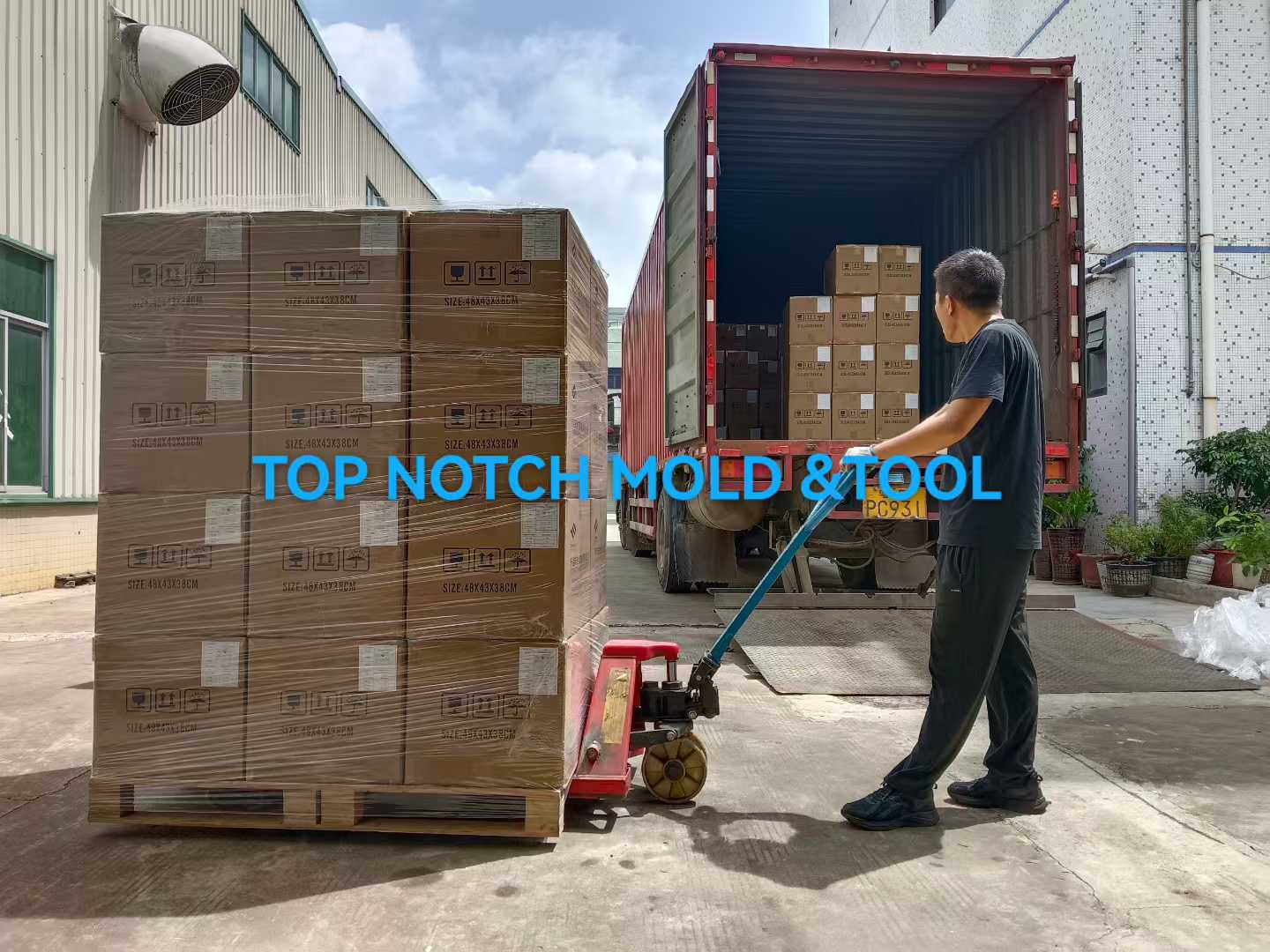
Plastic injection molding has become one of the most efficient and widely used methods for manufacturing high-quality plastic components in large volumes. The process begins with industrial design and product development, moves through mold design and fabrication, and culminates in mass production delivery. This comprehensive workflow involves mold makers, tool makers, and production teams working together to ensure that finished parts meet exact specifications while being delivered on time.
At the heart of the injection molding process is the injection mold, a precisely engineered tool used to shape molten plastic into the desired component. An injection mold typically consists of two main parts: the cavity and the core. The cavity forms the exterior shape of the part, while the core creates the interior features.
Mold makers and tool makers play a critical role in transforming designs into functional molds. Their expertise ensures that the mold is dimensionally accurate, durable, and suitable for high-volume production. In mass production, the mold must withstand tens of thousands to millions of injection cycles, which requires careful material selection, heat treatment, and surface finishing.
The quality of the injection mold directly impacts the efficiency, accuracy, and consistency of mass-produced parts. A poorly designed mold can lead to defects such as warping, sink marks, or incomplete filling, all of which compromise product quality and delay delivery schedules.
2. From Industrial Design to Product Development
Before mass production begins, the part undergoes a rigorous industrial design and product development process. This stage focuses on both functionality and manufacturability, ensuring that the final design can be produced efficiently using plastic injection molding.
Key considerations during product development include:
- Material selection for durability, flexibility, or chemical resistance
- Wall thickness uniformity to prevent warping
- Draft angles to facilitate part ejection from the mold
- Surface finishes for aesthetic or functional requirements
By integrating industrial design with mold design, manufacturers can optimize the product for both performance and manufacturability, reducing the risk of costly design revisions during mass production.
3. Plastic Mold Production for Mass Manufacturing
Once the product design is finalized, plastic mold production begins. Tool makers create high-precision molds using advanced techniques such as CNC machining, EDM (electrical discharge machining), and polishing. For mass production, molds are typically made from hardened steel or other durable alloys to withstand the high pressures and temperatures of injection molding.
Multi-cavity molds are often used in mass production to increase output. By producing multiple parts per injection cycle, manufacturers can achieve high efficiency and lower unit costs. The mold is carefully tested through trial runs, ensuring that molten plastic flows evenly through all cavities, parts meet dimensional specifications, and the ejection system works reliably.
4. Injection Molding and Mass Production Delivery
After the mold is validated, mass production begins. In injection molding, molten plastic is injected into the mold under high pressure, cooled, and then ejected as finished parts. This process is highly repeatable, allowing thousands or millions of identical components to be produced with minimal variation.
Mass production delivery involves producing these parts according to client specifications, conducting quality inspections, and preparing them for shipping. Key factors for successful delivery include:
- Consistent quality control: Parts are inspected for dimensional accuracy, surface finish, and functionality.
- Efficient logistics: Finished components are packaged to prevent damage during transit.
- On-time delivery: Coordinating production schedules, shipping methods, and customs clearance to meet customer deadlines.
Manufacturers often work closely with clients to establish delivery schedules that align with assembly lines, product launches, or distribution requirements. In many cases, mass production molds can produce parts continuously, enabling rapid fulfillment of large orders.
5. The Importance of Collaboration Between Mold Makers and Manufacturers
Successful mass production delivery depends on close collaboration between mold makers, tool makers, and injection molding manufacturers. Mold makers ensure that the mold is precise and durable, tool makers refine the tooling and ensure it meets specifications, and production teams operate injection molding machines efficiently.
By maintaining communication throughout the process—from industrial design to plastic mold production and injection molding—manufacturers can anticipate potential issues, reduce waste, and optimize cycle times, ensuring a smooth path from prototype to mass-produced parts ready for delivery.
6. Benefits of Plastic Injection Molding for Mass Production Delivery
Plastic injection molding is the preferred choice for mass production because it offers:
- High efficiency: Capable of producing thousands of parts per day
- Precision: Tight tolerances and consistent quality
- Scalability: Easily adapted from low-volume prototypes to large-scale production
- Cost-effectiveness: Multi-cavity molds and high-speed machines reduce unit costs
- Versatility: Wide range of thermoplastic materials and complex part geometries
These benefits make injection molding ideal for industries such as consumer electronics, automotive, medical devices, Verpackung, and household products.
7. Conclusion
Plastic injection molding mass production delivery is a complex but highly efficient process that connects industrial design, product development, mold making, and injection molding into a seamless workflow. The precision and durability of the injection mold, combined with expert tool makers and advanced plastic mold production techniques, ensure that high volumes of consistent, high-quality parts can be delivered on schedule.
By optimizing each stage—from conceptual design to final delivery—manufacturers can meet the demands of modern production, maintain quality standards, and provide clients with reliable, timely, and cost-effective solutions. Injection molding remains a cornerstone of modern manufacturing, enabling industries to deliver innovative plastic products at scale.