
WhatsApp/Wechat:86-138-2878-1334


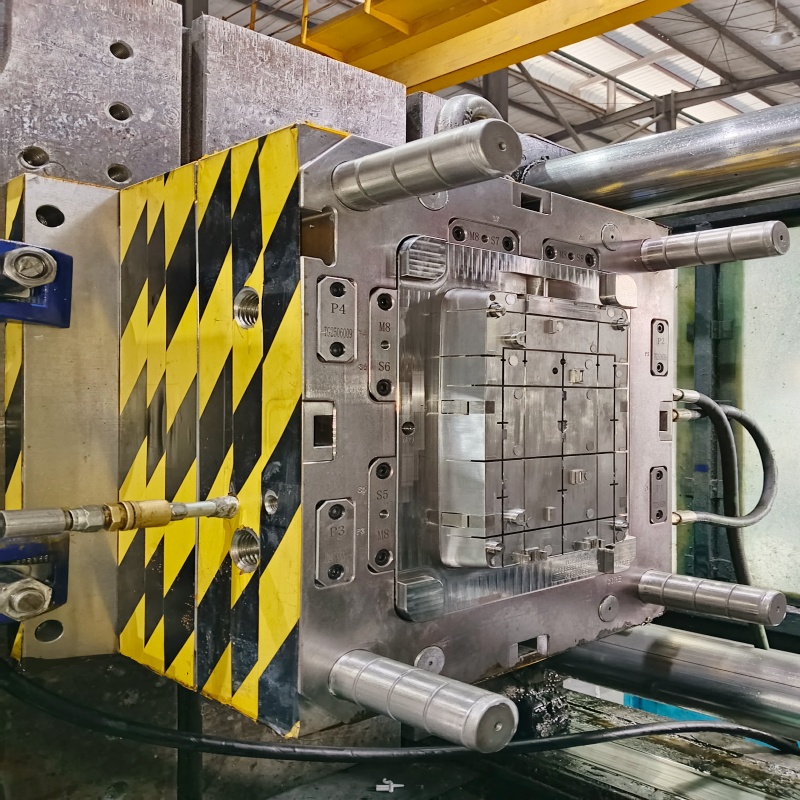
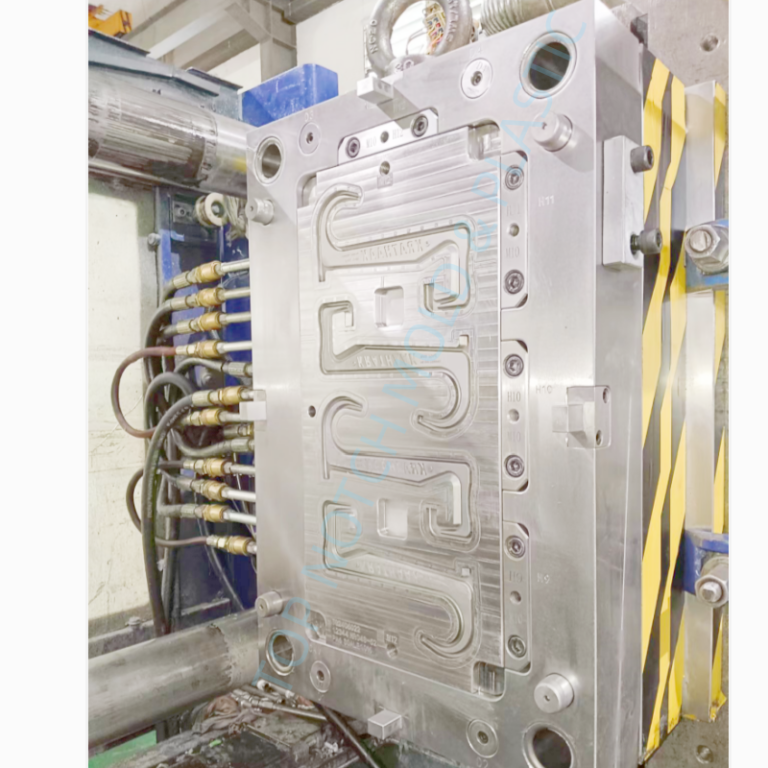
Medical Product Injection Mold
Description du moule
|
Nom
|
Moule à induction plastique |
| Matériau du moule | P20, NAK80, SKD11, S316, S50C,S45C,718H,718 ,1.2344, Per customer's requirement |
| Base du moule | LKM, HASCO, DME or Per customer's requirement |
| Type de moule en plastique | 3-moule à plaque,2-moule à plaque |
| Cavité | Simple/Multi cavité ,1*1,1+1,1*2,1+1+1,etc |
| Position de la porte | Porte du ventilateur,Sous-porte,Porte à point d’épingle,Vanne à canal chaud,Ouvrez Nozzel |
| Système d’éjection | Plaque de décapage,Lifter,Barre de poussée,Goupille d’éjection, etc. |
| Coureur | Type chaud/froid |
| Matériau en résine plastique | ABS+PC,PEHD, PP, nylon, REGARDER, PEBD, ABS, styrène, acrylique, acétal, PE, PTFE, PEI, et PES |
| Durée de vie du moule | 300,000-500,000-1,000,000 Coups |
| Delai | 25-35 jours après la réception du dépôt et l’approbation de la conception du moule par le client |
| Spécification | Suivez le dessin final en 3D |
| Détails de l’emballage |
Revêtement avec un film antirouille et emballé avec une caisse en bois
|
Détails de la production des pièces
| Matériau du produit | ABS,COMME,PP,PPS,PC,PE,POM,Le PMMA,PS,PEHD,TPE,TPU, etc. |
| Finition de surface | Finition de polissage,Finition texturée,Finition brillante,Peinture,Imprimé Slik,Peinture en caoutchouc, etc. |
| MOQ | 500 PC |
| Détails de l’emballage | Carton box or wooden Case upon product weight and customer's requirements. |
| Livraison | Par voie maritime ,En train ,ou par voie aérienne selon les besoins du client |
| Pays d’exportation | Janpan,Europe,ÉTATS-UNIS,Mexique,Australie,Moyen-Orient,Corée,l’Asie, etc. |
| Typique utilisé pour | Boîtiers, Conteneurs, Casquettes, raccords,y compris comme ci-dessous Boîtier d’outil électrique, Rasoirs jetables, Interrupteurs électriques,Caisses/Boîtes de recyclageTableaux de bord automobiles,Meubles de télévision,Unités d’inhalation de drogues,Pare-chocs automobiles,Poubelles à roulettes ,Seringues,Combinés téléphoniques ,Bols à vaisselle,Les DVD,Couvercles/fermetures de bouteilles,Boîtiers de batterie |
| Gamme de marchés | Électronique grand public,Produits industriels, , Traitement des aliments, aviation, Joints/joints d’étanchéité, éclairage, emballage, filtre,Santé, télécommunication, mécanique, traitement de l’eau, appareil, récréation,pelouse et jardin, éducatif, Pétrole et gaz, gouvernement, construction,plomberie, surveillance, Pompes, marin, Moteurs, Engrenages, Étiquettes RFID, électronique,et fixations. |
- Description
Medical Product Injection Mold: Precision, Qualité, and Applications
Injection molding is a cornerstone of modern medical manufacturing, enabling the production of high-precision plastic components used in devices ranging from syringes and diagnostic tools to surgical instruments and electronic housings. Medical product injection mold technology ensures consistency, safety, and durability in components that must meet strict regulatory and functional requirements.
This article explores the key aspects of medical product injection mold, including design considerations, material selection, manufacturing processes, assembly, quality assurance, and real-world applications.
1. Introduction to Medical Product Injection Mold
Injection molding involves injecting molten plastic into a mold cavity, where it cools and solidifies into a desired shape. For medical products, this process allows high-precision parts with tight tolerances and complex geometries to be produced in large volumes efficiently.
The primary objectives of medical product injection mold include:
- High precision: Essential for components like syringes, IV connectors, or microfluidic channels.
- Safety: Parts must be biocompatible and free from defects.
- Consistency: Repeatable quality is crucial in medical applications.
- Efficiency: Optimized cycle times reduce costs while maintaining quality.
Medical injection molds often include advanced features such as multi-cavity designs, hot runner systems, and cleanroom-compatible materials and finishes.
2. Design Considerations for Medical Injection Molds
The design of a medical product injection mold is critical to ensure both functional and regulatory compliance.
2.1 Mold Components
- Cavities and cores: Precisely machined to create intricate geometries.
- Gate and runner system: Ensures uniform flow of molten plastic and complete filling of the mold. Hot runner systems reduce waste and cycle time.
- Système d’éjection: Safely removes delicate medical components without surface damage.
- Cooling channels: Maintain uniform temperature to prevent warping or shrinkage.
2.2 Features Specific to Medical Products
- Thin walls and micro-channels: Essential for fluidic devices, syringes, or microtubes.
- Finition de surface: Smooth or textured surfaces can enhance function or improve patient comfort.
- Undercuts and snap-fits: Allow assembly without additional fasteners or adhesives.
Designing a mold for medical products requires close collaboration between engineers, designers, and medical specialists to meet functional and regulatory requirements.
3. Material Selection for Medical Products
Materials used in medical product injection mold must meet biocompatibility, sterilization, and chemical resistance standards.
3.1 Common Medical-Grade Plastics
- Polypropylene (PP): Lightweight, chemically resistant, widely used for syringes, IV connectors, and containers.
- Polycarbonate (PC): High strength and clarity, ideal for devices like incubators and transparent housings.
- Acrylonitrile Butadiene Styrene (ABS): Durable and rigid, often used for housings and non-contact components.
- Polyethylene (PE): Used for flexible medical tubing or disposable packaging.
3.2 Additives and Compliance
- Materials are often additive-free or use FDA-approved additives to meet biocompatibility standards.
- Some plastics are sterilizable via autoclave, gamma irradiation, or ethylene oxide, depending on the device requirements.
Proper material selection ensures safety, durability, and regulatory compliance in medical devices.
4. Injection Molding Process for Medical Products
The injection molding process for medical products is highly controlled to produce consistent, defect-free components.
4.1 Plastic Melting and Injection
Plastic pellets are heated to a molten state and injected under precise pressure and speed into the mold. Proper injection ensures full cavity filling and prevents defects like voids, sink marks, or flash.
4.2 Cooling and Solidification
After filling, the part is cooled within the mold. Uniform cooling is crucial to maintain dimensional accuracy, prevent warpage, and ensure proper function of microstructures or thin walls.
4.3 Part Ejection
Once solidified, ejector pins or plates carefully remove the part without damaging delicate features, which is especially important for thin-walled or microstructured components.
4.4 Multi-Cavity Production
Many medical molds are multi-cavity to maximize productivity. Each cavity is carefully balanced to ensure uniform filling, consistent quality, and identical dimensional accuracy across all parts.
5. Assembly of Medical Injection Mold Products
Many medical products require assembly after molding, including adding components or joining multiple parts.
5.1 Mechanical Assembly
- Snap-fit connections allow assembly without adhesives.
- Screws or ultrasonic welding may join housings or device shells.
5.2 Adhesive Bonding
- Biocompatible adhesives may be used for permanent joins.
- Often applied to create tamper-proof or leak-resistant assemblies.
5.3 Decorative or Functional Overlays
- Medical products sometimes include printed markings, labels, or color coding for identification and usability.
- Techniques like hot stamping, pad printing, or laser marking are integrated post-molding.
6. Quality Assurance in Medical Product Injection Mold
Quality control is critical for medical product injection mold, as patient safety and regulatory compliance depend on consistent, defect-free components.
6.1 Visual and Dimensional Inspection
- Detects surface defects, flash, warping, or incomplete filling.
- Dimensional checks ensure proper fit, function, and assembly compatibility.
6.2 Functional Testing
- Test mechanical parts for engagement, snap-fit function, or motion.
- Test fluidic parts for flow accuracy and leak prevention.
6.3 Sterilization and Biocompatibility Verification
- Confirm that sterilization methods do not compromise material integrity.
- Ensure materials meet ISO 10993 and FDA biocompatibility standards.
6.4 Process Control
- Monitor temperature, injection pressure, and cycle time to maintain consistency.
- Use statistical process control (SPC) to detect deviations and prevent defective batches.
7. Advantages of Medical Product Injection Mold
Medical product injection mold technology provides significant benefits:
- High precision: Ensures functionality in critical medical components.
- High-volume production: Multi-cavity molds increase efficiency and reduce per-part cost.
- Material efficiency: Minimizes waste through precise cavity design and hot runner systems.
- Consistency: Ensures repeatable quality and regulatory compliance.
- Design flexibility: Complex geometries, microstructures, and functional features can be incorporated directly into the mold.
8. Applications of Medical Product Injection Mold
Injection molding is used extensively across medical devices, including:
- Syringes and needle hubs: Precision-molded for accurate dosing and leak-free performance.
- IV connectors and tubing components: Critical for fluid management systems.
- Diagnostic equipment: Microfluidic devices, test kits, and sensor housings.
- Surgical instruments: Disposable handles, guides, and protective covers.
- Electronic medical devices: Housings for monitors, portable devices, and battery compartments.
In each application, the molded parts must meet strict functional, safety, and aesthetic standards.
9. Innovations in Medical Injection Molding
The medical injection molding industry continues to innovate:
- Multi-material molding: Combines rigid and flexible plastics in a single part for seals, grips, or ergonomic features.
- Micro-molding: Produces micro-sized channels, reservoirs, and intricate structures for diagnostics and fluid handling.
- Cleanroom molding: Molded parts in ISO-certified cleanrooms prevent contamination for critical medical applications.
- In-mold labeling and printing: Reduces post-molding handling while ensuring consistent labeling or branding.
These innovations improve functionality, patient safety, and manufacturing efficiency.
10. Conclusion
Medical product injection mold technology is a critical enabler for producing high-quality, precise, and reliable components in the medical industry. From mold design and material selection to injection molding, assembly, and quality control, every stage is carefully managed to meet strict functional, aesthetic, and regulatory requirements.
The advantages of using injection molding for medical products include:
- High precision and repeatability
- Efficient high-volume production
- Cost savings through reduced secondary operations
- Material optimization and reduced waste
- Design flexibility for complex and micro-scale parts
Applications span syringes, IV components, surgical instruments, diagnostic devices, and medical electronic housings. By leveraging advanced molding technologies, multi-cavity designs, cleanroom production, and stringent quality assurance, manufacturers can produce medical injection molded products that are safe, durable, and reliable for patients and healthcare professionals.
Moule d’injection, Électronique grand public, Pièces automobiles, Produits pour la maison intelligente, Produit de sécurité, Produits pour animaux de compagnie, Dispositif médical, Pièces industrielles, Produits pour bébés/mamans, Produits de papeterie/éducation, Autrui Écouteurs tour de cou, moules de casque Bluetooth pour le cou, moule en plastique, moule d’injection plastique, Moulage par injection plastique, Moule d’injection d’écouteurs tour de cou, tour de cou écouteurs moule en plastique
ENVOYER UNE DEMANDE
Produits connexes
© 2025 www.tpi-mould.com. All rights reserved by Top Notch Mold & Tool Co'Ltd
Alimenté par Wpboss